
Pitt County directs staff to draft reciprocal radio-ID agreements with neighboring counties
Get AI-powered insights, summaries, and transcripts
Subscribe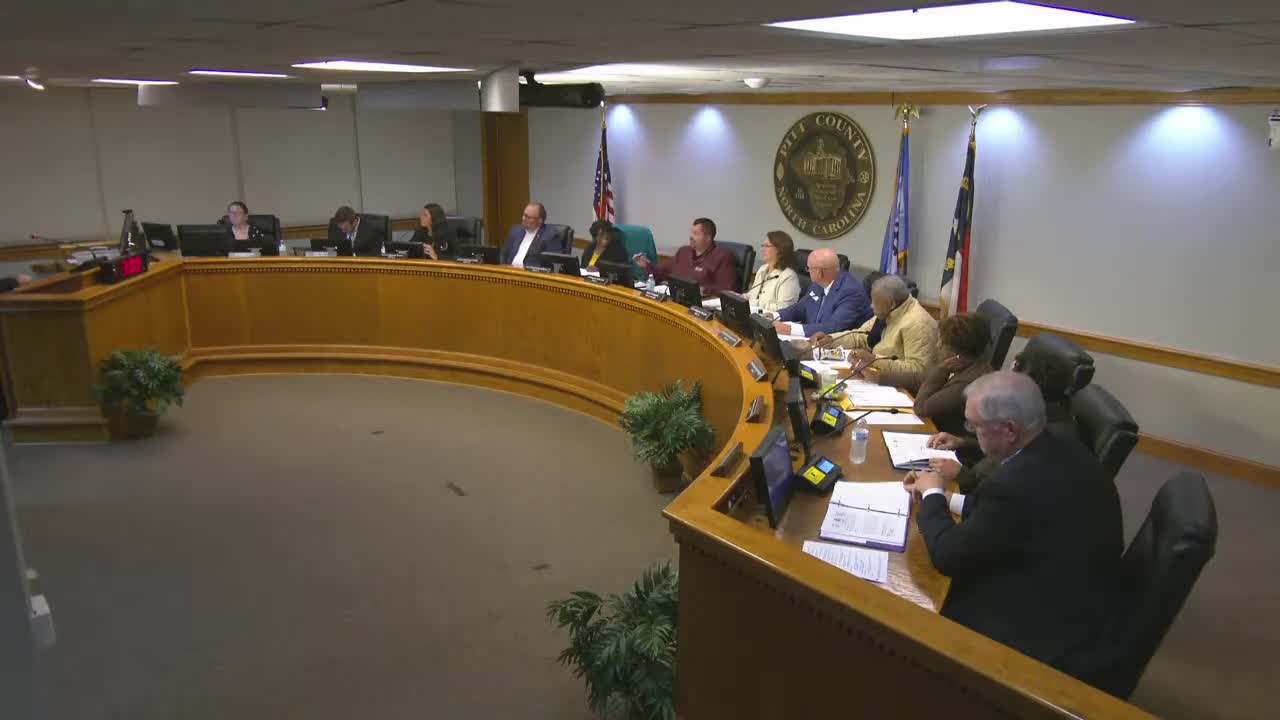
Summary
After an extended discussion about firefighter radio interoperability and mutual aid, the Pitt County Board of Commissioners directed emergency management to prepare agreements to exchange radio IDs with contiguous counties, waiving the $15 monthly subscriber fee in exchange for like-kind reciprocity and limiting issued IDs to six per department.
The Pitt County Board of Commissioners on Nov. 3 directed the county's emergency management department to prepare reciprocal agreements allowing out-of-county fire departments in contiguous counties to use Pitt County radio IDs to improve on-scene communications during mutual-aid responses.
The action, approved after more than 30 minutes of technical briefing and public comment from local chiefs, stipulates that each outside department that accepts radio IDs will purchase and program its own radios and, in exchange for an equal transfer of IDs, will be exempt from the $15 monthly subscriber fee. The board set a tentative limit of six radio IDs per requesting department and asked staff to return draft interlocal agreements for formal approval.
County emergency management staff explained the technical and cost constraints behind the decision. Randy Gentry, the county's emergency management representative, explained that "The radio IDs we purchase in blocks of 500 at about $10,000 per block," and that if there are available IDs the county would not incur immediate out-of-pocket costs to assign them. He added that the county currently shares 1,114 radio IDs among 12 agencies and that the system costs roughly $1 million a year to operate in maintenance, tower leases and utilities.
Fire chiefs said interoperability on a single system is important for incident safety. Chief Thomas Lilly described a recent structure fire and said, "I keyed up at least 8 times before I can ever get through Edgecombe County to let them know I had trucks in route and what trucks were in route." Chief David Moore and others argued that requiring responders to switch to the state VIPER system during interior firefighting operations would be impractical and could hamper incident command.
The board and staff described alternatives and limits. Staff reiterated that departments must provide their own radios (estimated in the transcript at $6,000—6,000 depending on features) and pay any programming costs (estimated around $350), and that the $15/month subscriber fee historically covers a small share of the system's operating cost. County staff said additional capacity on the 700 MHz system may be required if the county assigns many new IDs, a potential expense the county would address as demand grows.
The direction is procedural: emergency management will draft the reciprocal agreements and return to the board with the interlocal language and any operational details, including the six-ID limit. The motion was approved by the commissioners; the transcript records "motion passes" but does not include a roll-call tally in the public record.
Why it matters: Mutual-aid firefighting often places personnel from multiple departments in a single incident. Interoperability on a single radio system can reduce communication failures that affect firefighter safety and incident coordination.
What comes next: Emergency management will prepare draft agreements that set out the exchange of radio IDs, responsibilities for radio hardware and programming, and any conditions for future changes to fees or capacity. The board requested those agreements return for formal approval.