Get Full Government Meeting Transcripts, Videos, & Alerts Forever!
Get email alerts on the Consumer Protection topic
No spam. Unsubscribe anytime.
Court of Appeals hears Tidwell v. Jensen appeal over allegedly misrepresented used car, buyer's‑guide and inspection dispute
Summary
An appellate panel considered whether Utah consumer‑protection law and the FTC "used car" rule permit tort liability for a dealer's oral statements despite an "as‑is" sales contract and buyer's guide, and whether the district court erred in finding no knowledge that the vehicle had frame damage.
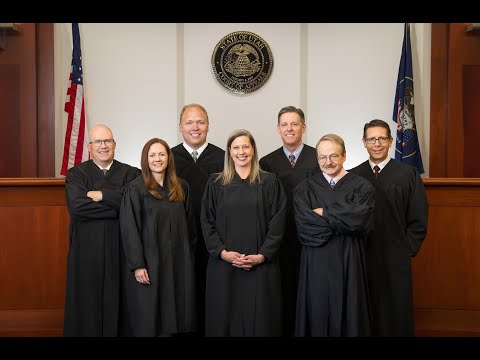
A three‑judge Utah Court of Appeals panel heard arguments in Tidwell v. Jensen, an appeal from a district court decision rejecting fraud and Utah Consumer Sales Practices Act (UCSPA) claims arising from a used‑car purchase. Appellant Richard Tidwell contends the dealer and salesperson misrepresented the vehicle's condition, presented a counterfeit safety inspection certificate and that contractual "as‑is" language and the buyer's guide cannot shield defendants from statutory or tort liability.
The appeal centers on two legal questions: whether the UCSPA (as written at the time of sale) or the FTC used‑car rule requires proof the seller knew a statement was false (a knowledge or intent‑to‑deceive standard), and whether an "as‑is" buyer's guide or motor‑vehicle contract can bar a consumer from pursuing tort remedies such as fraud. Tidwell's counsel also pointed to auction inspection flags and other documentary notes as evidence the seller knew or should have known of frame damage.
Why it matters: If the court adopts a knowledge or intent requirement for UCSPA claims, plaintiffs will face a higher burden to prove dealer misconduct. If, conversely, the court accepts a broader statutory reading or follows FTC regulatory policy, written "as‑is" disclaimers may not foreclose certain consumer claims.
Facts and record highlights
- Tidwell purchased a used vehicle marked "as‑is." Appellant's counsel said the Manheim auto‑auction inspection report listed an "ALT suspension/structural" flag (yellow light) and that the dealer had access to auction information. Counsel also described two phone calls logged at Toyota in which a caller inquired about frame repair and said the vehicle had frame damage.
- Tidwell alleges salesperson Toscano discouraged a closer frame inspection with statements such as "don't worry — it's been inspected," while the safety inspection certificate was provided only on the morning Tidwell picked up the car and later alleged to be counterfeit under Utah statutory criteria for inspection certificates.
- The district court concluded Tidwell did not present evidence any defendant knew the vehicle had frame damage and resolved the UCSPA/fraud claims against him. The court relied on the district record (including the presence of a safety inspection certificate given at sale) and credibility assessments.
Legal issues argued
- Mens rea under UCSPA and FTC rule. Appellant urged the panel that either the UCSPA did not require proof the seller knew the statement was false, or that the statute should be read to impose liability when a seller intentionally indicates performance characteristics without conducting due diligence; counsel cited Wagner (Utah Supreme Court Restatement/Prosser discussion) and the Tenth Circuit's FTC precedent. The judges pressed whether the district court had relied on lack of knowledge rather than an intent‑to‑deceive standard.
- Buyer's guide and "as‑is" contract language. Judges pressed whether a buyer who signed a motor‑vehicle contract and the FTC buyer's guide (stating the vehicle is sold "as is" and disclaims warranties) can nonetheless show reasonable reliance on oral representations for a fraud claim. Appellant argued the buyer's guide only addresses contractual warranties and does not operate to disclaim tort liability under Utah law or to nullify reasonable reliance.
- Preemption and private remedies. Counsel debated whether the FTC used‑car rule preempts state contract provisions that incorporate the buyer's guide and whether following FTC standards would leave a private plaintiff without a remedy (because the FTC does not provide a private cause of action). Judges explored this tension and the parties' framing of federal regulation versus state tort and statutory claims.
- Evidence of knowledge. The judges repeatedly asked appellant to point to the strongest evidence that the dealer knew of frame damage at the time of sale. Appellant cited the auction notation, the Toyota call notes, salesperson conduct in discouraging inspection, and the later‑provided safety certificate (which appellant contends was counterfeit), but the district court concluded those facts did not prove actual knowledge.
What the parties told the court
- Appellant's counsel argued the seller's affirmative representations and failure to do due diligence satisfy UCSPA liability absent a bona‑fide‑error defense, and that written disclaimers in the buyer's guide cannot be used to exculpate tort claims that rest on misrepresentations.
- Defense counsel emphasized that Tidwell bought the vehicle "as is" with no warranty and that the contract and buyer's guide weigh heavily against reasonable reliance; the defense also relied on the district court's finding that there was no evidence the defendants knew of frame damage at the time of sale.
Quotes from the argument
Judge Tenney: "So under 4(b)(2) isn't it the case that the only thing you can appeal from is the underlying judgment?" (questioning appeal timing and scope.)
Defense counsel: "This case is a case where the buyer explicitly purchased a vehicle as is with no warranty." (defense opening statement.)
Outcome and next steps
After rebuttal and extended questioning on knowledge, reasonable reliance, preemption and the buyer's guide, the panel submitted the Tidwell appeal for decision. The court indicated it will issue a written decision in due course.
Sources and limits
This article summarizes arguments presented during oral argument and describes the record and issues discussed on the live transcript. It does not decide factual credibility or legal outcomes; the appellate court's written opinion will state the court's holdings and legal reasoning.