Get Full Government Meeting Transcripts, Videos, & Alerts Forever!
Get email alerts on the Legal Ethics topic
No spam. Unsubscribe anytime.
Appeals court reviews fee accounting and evidentiary rulings after $139,000 retainer dispute
Summary
The Appeals Court heard argument in 24P1141, Stanley Webb v. George Leontire, an attorney‑fee and accounting dispute concerning a $139,000 retainer.
The Appeals Court heard argument in 24P1141, Stanley Webb v. George Leontire, an attorney‑fee and accounting dispute that grew out of a pretrial criminal‑investigation context.
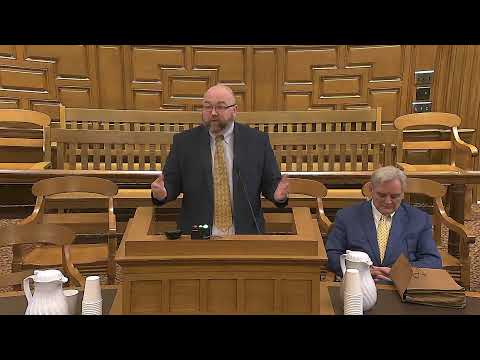
Christopher Trundy, for the Webbs, said Mr. Webb deposited $139,000 with attorney Leontire and later terminated the representation; the clients then requested an accounting and a refund of unearned fees. Trundy told the court Leontire declined to provide a contemporaneous accounting, treated the retainer as nonrefundable, later provided a reconstructed billing after a Board of Bar Overseers (BBO) inquiry, and that trial evidentiary rulings (including a ruling that struck testimonial evidence after invocation of the Fifth Amendment) left the Webbs unable to contest the lawyer’s asserted billing. Trundy argued the trial judge’s finding that the lawyer had shown the value of his services was conclusory and inconsistent with the record.
Kurt Hagstrom, for Leontire, said the trial judge reviewed the reconstructed billing and found it credible; the BBO investigated and did not pursue further action, and the judge permissibly evaluated the totality of the evidence (telephone records, emails, counsel testimony) and credited Leontire’s reconstruction. Appellee also defended the judge’s decision to strike witness testimony after invocation of the Fifth Amendment and said the court did not abuse discretion in weighing credibility between competing accounts.
Justices asked about what the trial court needed to find to support an award based on quantum meruit and whether the judge’s admission of reconstructed billing satisfied the client’s right to an accounting. The court also questioned whether striking testimony wholly when a witness asserted a blanket Fifth Amendment privilege was appropriate. The panel took the matter under advisement.
What happens next: the court will resolve whether the attorney met his burden to prove reasonable value of services and whether any trial‑level evidentiary or remedy errors require reversal or remand.