Appeals court hears challenge to admission of third‑party invoices as business records
Loading...
Summary
The court considered whether invoices and contractor records the plaintiff received from third parties were admissible under Massachusetts' business‑records statute (G.L. c. 233 §78) when introduced by the recipient rather than the document creator. Appellant argued the trial judge failed to make the statutory findings and that admitting such
The Appeals Court heard argument in 25P262, ADA Management Services v. Ho, over whether trial evidence admitting third‑party invoices as business records of ADA satisfied statutory foundation requirements.
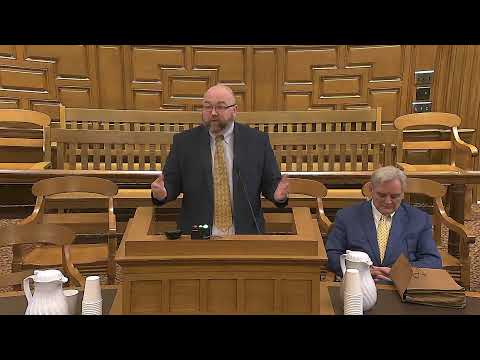
Alan Aaron, arguing for the appellant Samuel Ho, urged reversal, saying the trial court allowed ADA’s representative to identify and admit invoices that were created by third‑party contractors without the testimony of the contractor or a custodian with personal knowledge. Aaron stressed the statutory requirements in G.L. c. 233 §78 (the business‑records exception to hearsay): that records be made in the regular course of business and the proponent must offer evidence to establish that foundation. He also argued the trial court did not make the required findings and that originals and witness testimony from document creators were not produced.
Evan Freywitzer, for ADA Management Services, replied that the recipient witness (Palatman) testified repeatedly that ADA received and maintained the invoices in the ordinary course and that the trial judge expressly found, on the record and in denying a new‑trial motion, that the statutory requirements were satisfied. Freywitzer cited controlling precedent allowing receiving‑party records to be admitted when the receiving business integrates and relies on them (cases citing Beal Bank and Quinn Brothers were discussed).
Justices questioned the parties about the foundation for admission, whether a formal finding of the required elements was entered, and whether a receiving business’s routine practice (stamping invoices paid, attaching a check) suffices to convert a third‑party invoice into the receiving business’s record. The panel also noted that a motion for new trial prompted the trial judge to explain the basis for admission in an order.
The court took the matter under advisement.
What happens next: the panel will decide whether the trial court abused discretion in admitting the invoices and whether the judge’s post‑trial explanation cured any preservation or foundation gaps.