Get Full Government Meeting Transcripts, Videos, & Alerts Forever!
Get email alerts on the Property Law topic
No spam. Unsubscribe anytime.
Appeals court hears dispute over whether post-lease permits changed lease boundaries in Tresca Bros. case
Summary
The appeals panel on behalf of the Massachusetts Appeals Court heard argument in 24P1319, Tresca Brothers Sand & Gravel v. Eames Street LLC, over whether post‑lease building permits and recorded plans alter what the parties defined as the lease premises.
The appeals panel on behalf of the Massachusetts Appeals Court heard argument in 24P1319, Tresca Brothers Sand & Gravel v. Eames Street LLC, over whether post‑lease building permits and recorded plans alter what the parties defined as the lease premises.
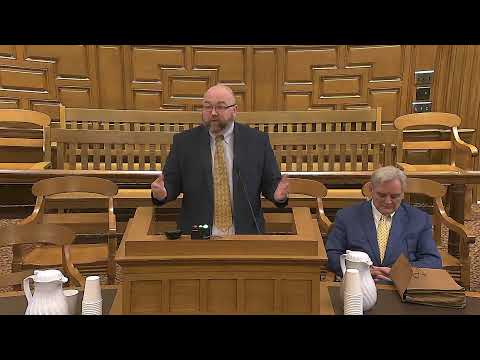
David Suny, counsel for Tresca Brothers, told the court that after ‘‘10 years of permitting’’ the company acquired permits and recorded plans that the landlord’s predecessor had signed off on, and those steps should be read into paragraph 1.02(c) of the lease because that paragraph expressly includes ‘‘licenses, permits, and other agreements.’’ Suny told the panel that ‘‘the permit runs with the land’’ and that the parties’ subsequent conduct (permitting, joint venture activity and financial investment by Tresca) showed the parties intended permit‑driven changes to the leased premises.
Alan Lipkin, representing Eames Street LLC and the purchaser Benevento, told the court the lease is unambiguous: it defines the leased area by an attached plan (Exhibit A) and, in Lipkin’s view, the record does not show a formal amendment. Lipkin said the ‘‘signed’’ permit‑application materials the appellant points to lacked attached plans and that the landlord’s representative had testified no written amendment of the lease occurred. Lipkin also disputed the appeal’s accusation that the purchase of the property was an anti‑competitive ‘‘straw man’’ transaction.
Justices pressed both sides on two key questions: whether paragraph 1.02(c)’s reference to ‘‘licenses, permits, and other agreements’’ should be read to include permits obtained years after the lease’s execution, and whether the landlord’s conduct (signing permit materials, participating in permitting processes) can be considered extrinsic evidence modifying an otherwise unambiguous written lease. Counsel for Tresca argued the court’s prior decisions upholding Tresca’s special permit and remanding to the superior court supported reading permitting history into the lease; appellee counsel emphasized the absence of a contemporaneous written amendment and the superior court’s summary‑judgment findings.
The court asked where signed permit applications appeared in the record and signaled skepticism when appellant’s counsel could not immediately point to an appendix citation. Both sides acknowledged existing factual disputes about signings, later testimony, and whether any contemporaneous plans accompanied the permits. The panel took the case under advisement.
What happens next: the court will issue a memorandum or opinion resolving whether the lease language must be read narrowly (Exhibit A alone) or whether permits and the parties’ post‑lease conduct can alter the lease premises. The argument record, the parties’ appendix citations, and the court’s prior decisions on the underlying special permit were the principal items the justices questioned in court.