Appeals court reviews judge's use of Tuohy-Rodriguez instruction and prosecutor's closing in Commonwealth v. Brandon Bamford
Loading...
Summary
The appeals court heard argument Nov. 4 in Commonwealth v. Brandon Bamford over whether a trial judge's post-deliberation Tuohy-Rodriguez instruction coerced a guilty verdict on one count and whether a prosecutor's closing remark was reversible error.
The appeals court heard argument Nov. 4 in Commonwealth v. Brandon Bamford over whether the trial judge abused his discretion by giving a Tuohy-Rodriguez instruction during deliberations and whether the prosecutor's closing remarks created a substantial risk of a miscarriage of justice.
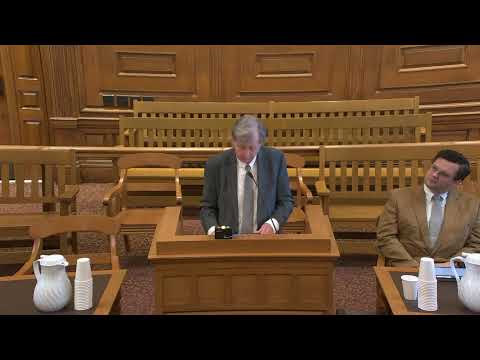
Attorney Carl Sucecki, representing Brandon Bamford, told the three-justice panel that jurors had sent multiple notes asking legal questions and, later, a note indicating they had reached a verdict on three counts but were deadlocked on a fourth. "At the end of the day, the judge gave a Tuohy Rodriguez instruction, and it he essentially coerced the verdict in this matter," Sucecki said, arguing the judge's sequence of responses and the timing of the instruction put the jurors under impermissible pressure.
Sucecki walked the court through the jury's notes and the judge's answers, telling the panel the judge's own remarks — "he'd been at it a long time" — and the subsequent instruction made it likely the jury resolved the remaining count as guilty shortly after the charge.
Assistant Attorney John Carmody, for the Commonwealth, replied that the judge acted within his broad discretion on questions about how long jurors must deliberate and how to respond to questions. Carmody told the court the first three juror notes posed legal questions and did not state a desire to stop deliberating; the judge reasonably concluded the panel had not yet exhausted deliberations and that an instruction encouraging continued deliberation was appropriate. On the closing-argument claim, Carmody acknowledged a prosecutor's final sentence — "you will come to the same conclusion that I have that the defendant is guilty of all the indictments against him" — was "better left unsaid," but he argued the remark did not infect the verdict when assessed in the context of the whole closing, the jury instructions and the evidence.
Justices interrupted at points to press both sides on what the notes actually communicated and whether the record clearly showed the jury was deadlocked on the count that later resulted in conviction. Counsel agreed the standard of review is abuse of discretion and debated whether any error created a substantial risk of a miscarriage of justice absent an objection at trial.
After questioning both parties, the court submitted the case for decision.
Provenance: Defense opening and timeline of jury notes at 00:02:40 ("At the end of the day, the, judge gave a Tuy Rodriguez, instruction...") and Commonwealth argument at 00:16:50 (prosecutor's quoted closing).