
Butler County mobilizes food banks, approves $125,000 to Shared Harvest as SNAP benefits face delays
Get AI-powered insights, summaries, and transcripts
Subscribe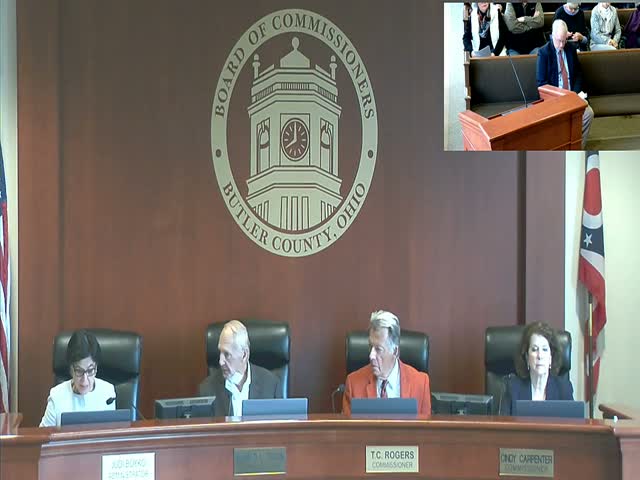
Summary
Facing possible November disruptions to SNAP benefits during the federal shutdown, Butler County officials described local triage steps, directed outreach and approved a $125,000 contribution to Shared Harvest to shore up county food pantries.
Butler County commissioners on Nov. 5 heard from county officials who warned that the federal shutdown could delay SNAP benefits for thousands of county residents and approved a $125,000 contribution to Shared Harvest to support local food pantries.
County Administrator (Administrator Boyko) told the board that Job and Family Services (JFS) had moved from planning to implementing a triage plan developed in October. "Butler County is only a conduit," Boyko said, explaining that benefit determination and funding are handled at the state level even though the county handles intake and client access.
Shannon Glendon, director of Butler County Job and Family Services, described stepped-up communications and referral work. "We put this messaging across our platforms... and added a direct link on our website to our local food pantries," Glendon said, adding that staff have been trained to refer callers and walk-in clients to nearby food resources and to 211.
Officials provided counts and timing that shaped the county's response: roughly 17,500 SNAP households representing about 38,000 recipients; about 7,200 of those households include at least one child; and SNAP distribution is staggered through the month. The county estimated that about 6,500 households receive benefits in the first week of each month and could miss the November issuance if the shutdown persists. Glendon said average monthly SNAP values run about $190–$200 per individual and about $600 for households with a child.
Administrator Boyko noted Governor Mike DeWine recently signed an executive directive directing the Ohio Department of Job and Family Services to make $7 million available to state food banks and up to $18 million in emergency cash assistance through Ohio Works First. County staff said they have not yet received county-level distribution guidance on how that $7 million will be allocated among Ohio counties.
To address immediate food needs, Boyko proposed two steps: authorize a county employee food drive coordinated with Shared Harvest, and consider a direct county contribution to the local macro food bank. After discussion about distribution equity and reporting, the board approved a motion to contribute $125,000 to Shared Harvest with the proviso that the funds be used for Butler County pantries only and that Shared Harvest provide reporting on distribution and demand. The motion passed on a roll-call vote of Commissioners Carpenter, Rogers and Dixon.
Commissioners and JFS staff also discussed other local options, including the county's Prevention, Retention and Contingency (PRC) program (funded by TANF) to address urgent needs such as utilities or rent. Glendon said the PRC application is available in the JFS lobby and on the department web page and that staff try to determine eligibility within the program's 10-day promptness standard when families are in crisis.
County officials emphasized limits: the county cannot directly distribute federal SNAP funds or immediately replace all benefits. Instead, they are leaning on coordinated referrals to local pantries, outreach to social-service partners, and the approved Shared Harvest contribution to reduce immediate food insecurity.
The commission asked county staff to return with more precise numbers on SNAP dollar shortfalls for the earliest-affected households and more detail on PRC budget availability.
Ending note: Commissioners asked for weekly or biweekly reporting on how the Shared Harvest funds were being distributed and encouraged outreach to municipal partners to explore additional contributions.