Get Full Government Meeting Transcripts, Videos, & Alerts Forever!
Get email alerts on the Streetlighting topic
No spam. Unsubscribe anytime.
Committee presses DOT on streetlight upgrades and lack of LED inventory amid $21.9M program
Summary
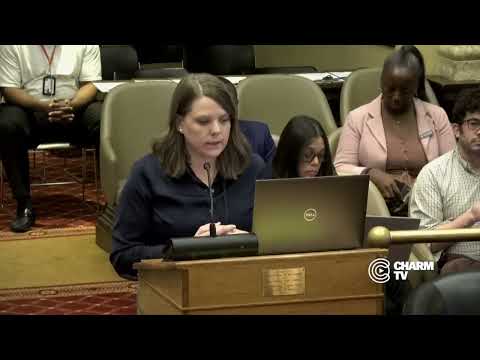
Councilmembers pressed the Department of Transportation on Oct. 29 over why the city appears to have no LED streetlight inventory despite a roughly $21.9 million streetlighting appropriation.
City Councilmembers at the Oct. 29 Budget & Appropriations Committee hearing pressed the Baltimore City Department of Transportation for details about a citywide streetlighting upgrade and whether DOT currently has LED fixtures in inventory, citing constituent concerns about long-unfinished lighting replacements.
Councilman Isaac Schleifer (Fifth District) led the questioning, saying a walkthrough in his district found “zero available LED lights” for upgrades despite prior promises to replace all city streetlights with LED fixtures. Schleifer asked DOT to explain how roughly $21.9 million budgeted for streetlighting is allocated and why inventory has reportedly been unavailable for more than a year.
Why it matters: Streetlighting affects pedestrian safety, public perception of neighborhood upkeep and long-term energy costs. Council members said slow or inconsistent upgrades are a recurring constituent complaint.
What DOT said
- DOT representatives described a multi-part budget and operational structure for streetlighting: pole rental payments to BGE ($6.8 million), utility costs ($6.6 million), maintenance ($2.5 million), materials and supplies (~$804,000), and personnel costs (~$2.9 million). DOT also cited fleet and principal-and-interest costs as further budget items. - Deputy Director Brandon Buckner said the department has a plan to update streetlights citywide but emphasized that procurement and vendor capacity matter: upgrading a system requires vendors to install and maintain fixtures across the service life, not only acquiring LED bulbs. - Director Veronica Macbeth said DOT has been ordering LEDs and that supply-chain backlogs and tariffs have contributed to delays; she said the department has established an agreement with BGE to collect knocked-down poles and catalog assets and that DOT replaces city-owned poles when required.
Council concerns and follow-up requests
Councilmembers asked several operational questions the DOT could not fully answer on the spot: how much of the budget is dedicated to purchasing new LEDs, whether DOT currently has LEDs in stock, and what repairs DOT staff perform that BGE would not. DOT said some inventory exists and that the department has been ordering LEDs, but acknowledged a backlog and agreed to provide written follow-up.
DOT committed to provide the committee with: - A detailed streetlight budget breakout showing how the $21.9 million (FY26 general fund appropriation cited in testimony) is allocated across rental, utility, maintenance, personnel, fleet and capital purchases. - Current inventory figures for LED fixtures and an expected delivery timeline for outstanding orders. - Clarification of which repairs and pole replacements DOT performs directly and which are addressed by BGE under existing arrangements, and whether a memoranda of understanding (MOU) or other agreement exists or is proposed for transferring maintenance responsibility for remaining residential poles.
What the committee asked to watch for
Councilman Paris Gray suggested exploring an MOU with BGE for residual residential poles where BGE’s maintenance could be faster and more reliable; DOT said the city currently owns certain poles and is required to maintain them, and there is no current plan to transfer ownership. Committee members also asked 311 and DOT to review intake and closure processes to ensure work is routed and tracked correctly when poles involve both city and BGE assets.
Next steps
DOT agreed to supply the requested written information and an official email answering committee requests. The committee recorded the follow-up requests as part of its official record; the DOT supplemental appropriation was advanced favorably to second reader on Nov. 10.