Get Full Government Meeting Transcripts, Videos, & Alerts Forever!
Get email alerts on the Search And Seizure topic
No spam. Unsubscribe anytime.
Appeals court considers whether pat frisk of juvenile met ‘specific and articulable facts’ standard
Summary
Defense counsel argued the pat frisk of the juvenile was unlawful because officers lacked the specific and articulable facts Article 14 requires; the Commonwealth said the totality of circumstances — targeted patrol, prior firearms contacts and the juvenile’s atypical behavior — justified a frisk.
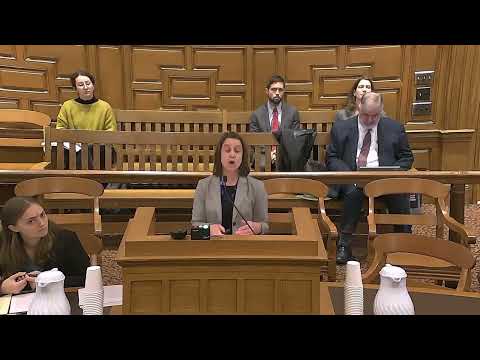
Joseph Schneiderman, representing the youth appellant, told the court that the Commonwealth relied on labels and isolated prior arrests instead of specific, articulable facts required to justify a pat frisk. Schneiderman argued officers’ testimony described the youth simply looking away, touching a nearby car, or holding a shoulder/fanny pack; there was no evidence of a bulge, weapon, secretive motion, waistband adjustments, or other furtive conduct that would support a frisk. He emphasized caselaw requiring temporal and spatial proximity for high‑crime‑area inferences and said the record was not developed on the prior arrest that officers referenced.
Assistant District Attorney Ian McLean replied that the totality of the facts supported reasonable suspicion: officers were outnumbered, the motion judge found the area to be a high‑crime zone based on targeted patrol and community complaints, the juvenile held a bag officers associated in their training with concealing firearms, and the juvenile’s behavior was atypical compared with prior encounters.
Defense counsel pressed that a single prior arrest or a distant arrest without context cannot be the basis for assuming dangerousness; McLean replied that officers’ state of mind and training matters in the totality‑of‑the‑circumstances analysis and that they are entitled to take reasonable steps to ensure safety.
The panel questioned counsel about the record’s clarity on how many officers were present and whether the judge relied on the bag and prior encounters; the motion judge credited the officers’ testimony and the case was submitted for decision.
Provenance: Defense and Commonwealth totality arguments appear in transcript (topic intro: block_12; topic finish: block_15).