Appeals court weighs claims of juror exclusion based on national origin and delayed evidence disclosure
Loading...
Summary
Emma Quinn Judge, counsel for Ephraim Jean, argued the trial court erred by asking a prospective juror a national‑origin question and excluding the juror for cause, and she pressed the appellate panel to reverse on that and related disclosure errors.
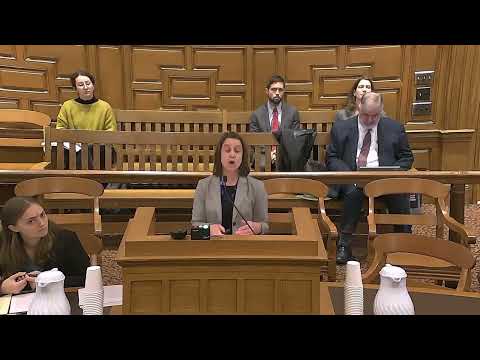
Emma Quinn Judge, counsel for Ephraim Jean, told the panel that the jury selection error in his trial was rooted in a national‑origin question that should never have been asked and that the juror’s subsequent exclusion was structural error. “For his national origin, the juror would not have been excluded for cause,” Quinn Judge said, arguing the question asked the juror essentially whether he would be more uncomfortable judging the defendant because both were Haitian and that the line of questioning denied the defendant a jury of his peers.
Quinn Judge urged the court to treat the error as structural, citing Batson/Tucci‑style protections and cases the briefs relied upon; she also argued preservation was satisfied because defense counsel objected in a way that alerted the judge to the equal‑protection problem. The panel questioned whether defense counsel had used the precise statutory magic words required to preserve a Batson claim; Quinn Judge responded that the record contained sufficient notice invoking equal protection.
On disclosure issues, counsel argued that the Commonwealth provided time‑stamped Discord texts and certain medical records late in the process, giving defense counsel insufficient time to use those materials to impeach the victim. Quinn Judge said the texts’ timestamps conflicted with video time stamps and that the messages’ context (a group chat) could have been used to challenge credibility and explore alternative explanations for the complaining witness’s conduct.
Assistant District Attorney Paul Lin responded that a juror who says she cannot be fair based on the identity of the defendant is a valid basis to strike for cause and that the motion judge’s factual findings about targeted patrols and disclosure handling were not clearly erroneous. On the texts, Lin said the record does not show willful suppression and that the Commonwealth could have explained technical issues with video timestamps and disclosure; he urged the panel to conclude any error was harmless.
The panel pressed both sides on preservation, the distinction between preserved and unpreserved claims, and the appropriate remedy if errors were found. After argument the court took the case under advisement.
Provenance: Defense argument on juror exclusion and Brady/first-complaint issues appears early and throughout the record (topic intro: block_7; topic finish: block_11).