Get Full Government Meeting Transcripts, Videos, & Alerts Forever!
Get email alerts on the Pottstown Preservation topic
No spam. Unsubscribe anytime.
Huntersville adopts Pottstown preservation plan after months of public review
Summary
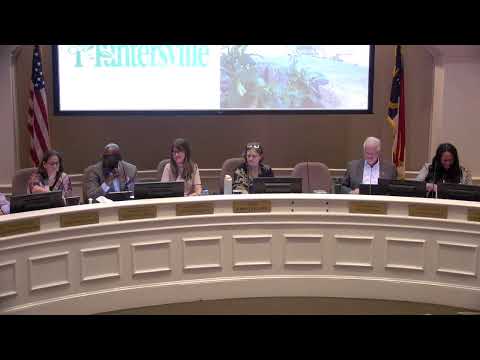
The Huntersville Board of Commissioners voted unanimously Nov. 3 to adopt the Pottstown Community Preservation Plan as a working document, following public comment and an extended staff presentation.
The Huntersville Board of Commissioners voted unanimously Nov. 3 to adopt the Pottstown Community Preservation Plan as a working plan, following public comment and an extended staff presentation.
The plan lays out a multi-strategy framework that includes historic designation pathways, community land trust options, demolition-control strategies and targeted implementation steps. "We did put a recommended implementation an action plan in the final section of the plan," the consultant working with the project said, describing the plan as a starting point rather than a finished regulatory package.
Why it matters: Pottstown residents urged the town for clearer boundaries, more frequent progress reviews and financial oversight before adoption. Several speakers said demolition of older homes is already underway and asked the town to ensure the plan would preserve character where residents want it. "There is a need for more accessible education and outreach regarding land trust overlays and historic designations," Stephanie Brown, a representative of the Pottstown leaders group, read from the group's letter to the board.
What staff and consultants told the board: Staff explained that North Carolina law constrains some local tools but that an overlay district remains a viable option in some circumstances. Staff also said the Mecklenburg County allocation of extraterritorial jurisdictions means the town already has development influence in the area but that some funding or service types are limited outside municipal limits. A staff member summarized the map used in the plan and explained ETJ (extraterritorial jurisdiction) lines and their practical effect on service delivery and town-funded projects.
On specific mechanisms, the consultants noted community land trusts as a preservation tool and cited experience establishing similar trusts elsewhere. "Supporting a nonprofit to acquire property is a very valid way to also approach the goals of preservation," a consultant said, describing how a land trust portfolio can secure homes long-term. Staff said the town's Landmarks Commission participated in plan development and has completed an initial survey identifying properties that qualify for designation and others that warrant deeper study.
Board members and residents pressed for accountability and closer community engagement. Commissioner Latoya Rivers emphasized the need to "build trust between the town and the community" and asked for frequent check-ins; staff said work groups and an implementation coalition could meet on a schedule agreed by the community and board. "We can meet when you're ready to meet," a staff presenter told commissioners, offering to provide regular updates and to coordinate agencies and nonprofit partners.
The vote and next steps: Commissioner Latoya Rivers moved to adopt the plan as a working document; the motion carried unanimously. Staff and the consultant said the next steps would be formation of a working coalition, prioritization of strategies with the community, and follow-up work on property surveys and funding pathways. The adoption does not itself create new zoning or demolition controls; those would require separate ordinance actions if recommended and pursued.
Public comment: Residents who spoke at the meeting urged additional outreach, clearer boundaries for ETJ properties and more frequent reviews — some suggested six-month check-ins rather than a two-year review cycle. "We request the plan to include a requirement for formal review," the Pottstown leaders group's letter read. The board's unanimous vote authorizes staff to proceed with the plan's implementation steps and coordinate the recommended work groups.
The plan is available on the town website and staff said they will provide timing and contact information for the first implementation meetings.