Get Full Government Meeting Transcripts, Videos, & Alerts Forever!
Get email alerts on the Administrative Warrants topic
No spam. Unsubscribe anytime.
Wilsonville staff propose municipal administrative‑warrant code to inspect properties for nuisance and safety
Summary
City attorney Amanda Guile Hinman and staff attorney Tobin Montalvo outlined draft code that would authorize the municipal judge to issue administrative warrants to allow city staff limited entry onto private property for nuisance, public health, abatement and inspections when consent is refused and exigent alternatives are exhausted.
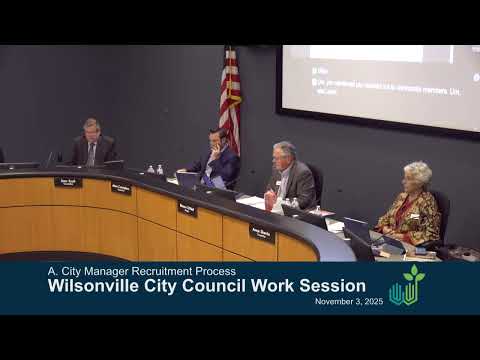
Wilsonville staff presented draft code language Nov. 3 that would authorize the municipal judge to issue administrative warrants allowing city officials to enter private property in limited circumstances to investigate, abate or remove health, safety or code violations.
Tobin Montalvo, an intern in the city attorney’s office, said the draft would create a process between voluntary consent and litigation: staff would first attempt to locate owners, present credentials and request entry; if consent is refused, staff may seek a warrant from the municipal judge supported by an affidavit stating the applicant’s status, the legal basis for the entry, the location and the factual basis for the judge to find cause. Montalvo said the affidavit and an on‑the‑record review before the judge would be required and the warrant would specify authorized personnel, the property to be entered and any limits on the search or seizure.
For execution, the draft language requires presenting credentials and purpose to occupants, leaving notices in an obvious place if property is unoccupied, and listing seized items. Forcible entry would be permitted only if explicitly authorized by the judge based on narrowly identified reasons (immediate health or safety threat, prior refusals, unoccupied property with owner refusing consent). The city attorney said the draft was reviewed with the municipal judge and incorporated his suggested edits.
Councilors asked about other cities’ experience; staff said several Oregon cities (Beaverton, Tigard, Corvallis) use similar processes and that administrative warrants are rare and used as a last resort. Council consensus was to schedule a public hearing at the next council meeting; staff will present formal code language for hearing and potential adoption.