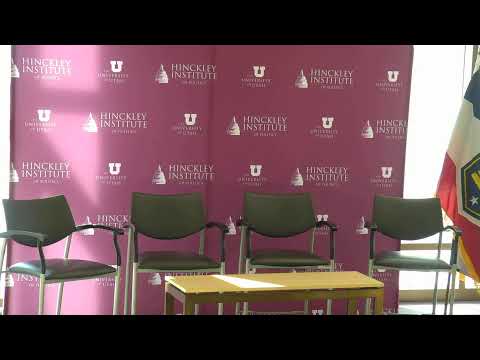
Ukrainian Ensemble Kerbassy Frames Folk Song as Cultural Resistance at Hinckley Forum
Loading...
Summary
Kerbassy, a vocal ensemble from Lviv, described how performing centuries-old Ukrainian folk songs sustains cultural identity and acts as a form of resistance during a Hinckley Forum at the University of Utah.
Kerbassy, a vocal ensemble from Lviv, described how performing centuries-old Ukrainian folk songs sustains cultural identity and acts as a form of resistance during a Hinckley Forum at the University of Utah.
"Our voice, especially through prism of culture, was always suppressed," a member of Kerbassy said during the Nov. 5 forum. The ensemble explained that songs passed down orally — lullabies, calendar songs and ritual music — carry practical knowledge and emotional memory that written records alone do not preserve.
The group traced its origins to the Lehi Korbas Theater in Lviv, where actors sang together after rehearsals and gradually developed a professional ensemble over 20 years. "Sometimes you feel that you literally fall in love with a song," a Kerbassy member said, describing how songs collected from elders, archives and fieldwork are arranged for performance.
Moderators and performers emphasized the multiple roles the residency plays on and off campus. Utah Presents’ community engagement manager Melissa Salguero outlined weeklong activities that included lectures connected to a university course, a K–12 matinee for roughly 500 Salt Lake Valley students and a public evening performance at Kingsbury Hall at 7:30 p.m.; student tickets are $5 with an Arts Pass. Band members Sev and Artem joined the group for translation during the forum.
Onstage, the performers described how long-standing lyrics can gain new meaning under wartime conditions. "When we perform some songs that are more than a hundred years, the meaning of them is sometimes different when it was seen by our ancestors and for now," a member said, adding that ancestral hints in the songs can provide “power” in difficult times.
Panelists said the emotional content of traditional music often resonates with international audiences even when listeners do not understand Ukrainian. "There is something beyond the lyrics that is coming through music," a member said, noting that imagery tied to landscape and ritual frequently elicits strong audience responses.
The ensemble outlined its research practices: a mix of collecting songs from friends, consulting published songbooks and ethnomusicology archives, and doing field recordings with elder singers. Members said they work with older tradition-bearers and with ethnomusicologists who catalog and preserve recordings; Kerbassy then adapts material theatrically while aiming to respect the original vocal techniques.
Speakers addressed the political dimensions of culture, arguing that cultural visibility counters narratives that appropriate Ukrainian creative work. "We can just say that we also matter," a Kerbassy member said, rejecting claims that major cultural exports belong only to neighboring states.
The group also discussed plans beyond Utah: remaining U.S. dates in New Mexico and Arizona, a return to their theater in Lviv and a charitable concert on Nov. 23 in Les Korbas Theater to raise funds for a regiment the ensemble supports. The performers framed that work as part of both artistic practice and civic solidarity.
The forum prioritized student engagement and closed with audience questions about practice, emotion onstage and the role of artistic education in national life.
Kerbassy’s residency continues with a student matinee and a public performance at Kingsbury Hall. The ensemble said preserving and sharing regional songs remains central to their work as performers and cultural interlocutors.