
Carter County board appoints special-question committee to oversee possible teacher collaborative-conferencing vote
Get AI-powered insights, summaries, and transcripts
Sign Up Free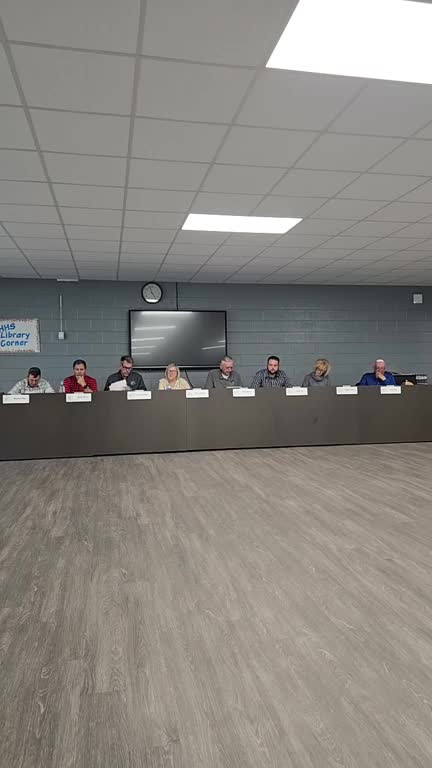
Summary
The Carter County School Board at its meeting appointed a six-person special question committee to oversee a prospective collaborative-conferencing vote after the Carter County Education Association submitted a petition it said included more than 15% of required employee signatures.
The Carter County School Board at its meeting appointed a six-person special question committee to oversee a prospective collaborative-conferencing vote after the Carter County Education Association (CCA) submitted a petition the association said included more than 15% of required employee signatures.
Rebecca Mayes, identified in the record as CCA president, submitted a written petition asking the board to "hold the vote" or to allow the CCA to administer it; the petition text as read to the board stated the association had collected more than 15% of required signatures. Board members said they had consulted legal counsel and that the next step was to form a neutral committee to oversee the required survey or vote.
The committee the board approved comprises two district administrators or supervisors, one board member and three classroom teachers. The board record lists the committee members as Renee Lewis (board member representative), Danny McClain, Catherine Hyder, Lindsay Chambers (teacher, Hampton Elementary), Ned Smith (coach and teacher) and Tiffany Reyes (special-education teacher). A board member clarified to the meeting that this panel is a "special question committee," not the collaborative-conferencing committee itself; its sole charge is to oversee the staff vote and survey process.
Tony Garland moved to appoint the six-person committee; the motion was seconded and carried on a roll-call vote with the board recording affirmative responses from multiple members (see action record). The committee is expected to supervise the vote and, if employees authorize collaborative conferencing, the board will then appoint a collaborative-conferencing committee as required by the process discussed at the meeting.
The board did not discuss a timeline for the committee's work in the available record. The petition writer said she would be out of town for the meeting but offered to meet with board members about next steps; the board took the motion to form the overseeing committee and completed the roll-call vote.
Ending: The special question committee is intended only to oversee the procedural vote; any subsequent appointment of collaborative-conferencing representatives would follow only if employees vote in favor of collaborative conferencing.