Get Full Government Meeting Transcripts, Videos, & Alerts Forever!
Get email alerts on the Home Repair topic
No spam. Unsubscribe anytime.
Lawrence Habitat requests $250,000 to expand critical home repair for low‑income households
Summary
Lawrence Habitat for Humanity told AHAB it has a growing wait list for critical repairs and mobile home work and asked for a larger award to serve more families and cover rising repair costs. Last year’s award covered more modest repairs; Habitat now reports average project costs have grown to $12,000–$15,000.
Stacy Schroeder of Lawrence Habitat for Humanity presented the organization’s critical repair program and requested expanded funding to meet growing demand.
Schroeder said Habitat began with an aging‑in‑place focus for seniors and then added a broader critical repair track and mobile‑home repairs. Repairs target major systems—roofs, plumbing, heating and accessibility—so low‑income homeowners can remain safely housed. The organization said it had a wait list of more than 70 families and that per‑project costs have increased: repairs that were once $3,500 now commonly cost $12,000–$15,000 when work includes roofs, soffit, siding or larger accessibility scopes.
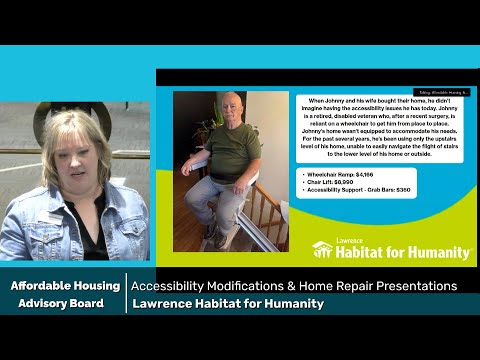
She offered three case examples: installation of an exterior wheelchair ramp and an interior chairlift that restored mobility for a homeowner; a $2,800 mobile‑home bathroom floor and toilet repair completed through a partner covering materials and Habitat covering labor; and a comprehensive ramp and soffit repair that removed safety hazards for a disabled resident.
Habitat asked the AHAB to fund work that would assist approximately 15–16 families at the higher average project cost. Board members asked about in‑kind contributions and contractor discounts; Schroeder said about 10% of project value comes from volunteer time or donated materials on average and that contractors are paid standard rates most of the time.
Schroeder explained Habitat’s five‑year recapture/lien approach (a five‑year lien to protect the public investment) and said the organization would consider longer affordability periods if the board wanted to explore that option.