Get Full Government Meeting Transcripts, Videos, & Alerts Forever!
Get email alerts on the Transportation topic
No spam. Unsubscribe anytime.
BCPS staff presents school start‑time analysis; estimates at least $10M in changes and recommends pause and monitoring
Summary
BCPS staff and a transportation consultant presented research on changing school start times, cited possible academic and health benefits for older students but flagged major operational, cost and safety tradeoffs. The division estimated a minimum $10 million cost and recommended pausing any move while monitoring neighboring districts.
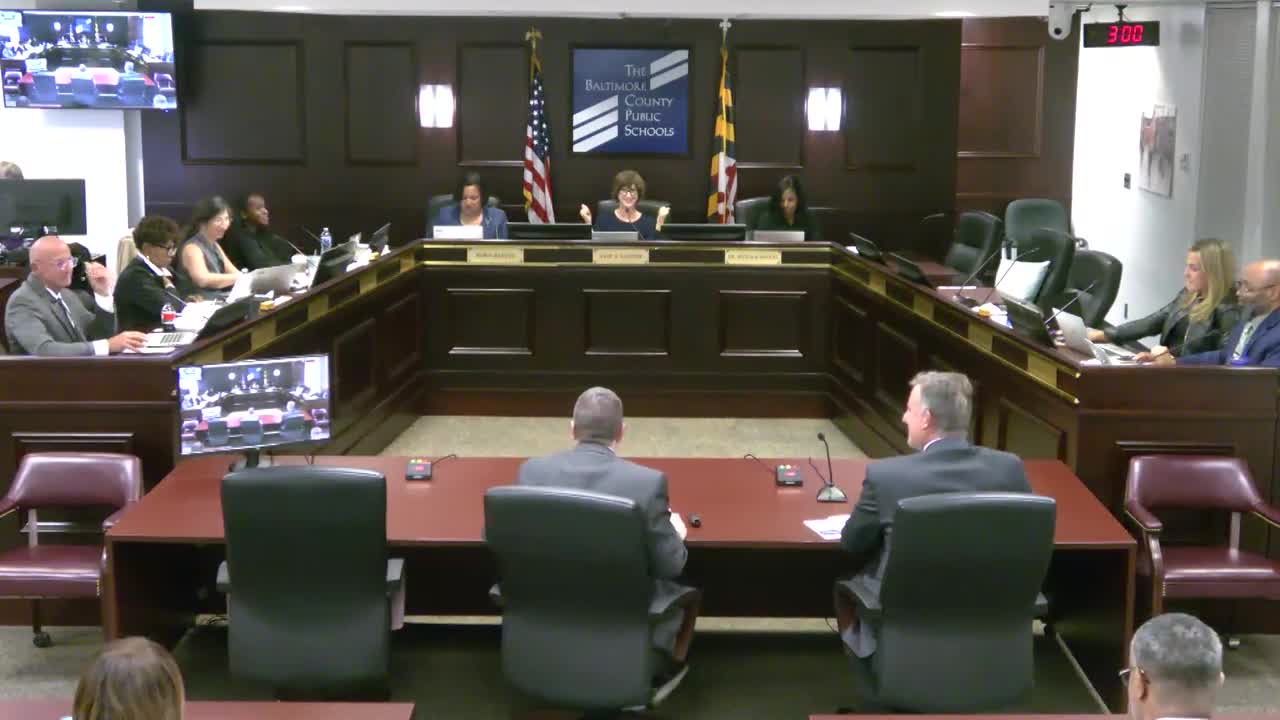
Dr. David Grama, division lead for operations, and transportation consultant David Ramsey delivered a detailed briefing on school start times during the Oct. 21 board meeting.
The presentation summarized research that later start times for secondary students are associated in some studies with better sleep and related health benefits. The staff also laid out operational constraints: Baltimore County operates a multi‑tiered bus system (about 708 routes) with a two‑hour‑plus bell window (presently 7:25 a.m. to 9:30 a.m.). Ramsey and staff said compressing or reordering start times could require significantly more buses and drivers, and would affect magnet routing, special‑transport services and community scheduling.
Dr. Grama said the division's preliminary estimate to shift start times would be "at least $10,000,000," and that higher estimates (as much as about $20 million) were cited during analysis in some scenarios; added costs would include additional buses, driver staffing, potential bus‑lot capacity and athletic facility upgrades.
Presenters recommended pausing any policy change at this time, monitoring outcomes and data from neighboring districts that have changed bell times, and continuing to study funding and operational options before proposing an implementation plan.
Board members questioned bus fleet capacity, the number of lighted stadiums at high schools, pilot feasibility and data on academic/attendance effects. Presenters said pilot testing would be difficult because magnet and special‑transport routes crisscross the county; they also noted the district had approximately a 50‑driver shortfall in staffing and that ridership patterns vary seasonally.