Get Full Government Meeting Transcripts, Videos, & Alerts Forever!
Get email alerts on the Special Education topic
No spam. Unsubscribe anytime.
Special-education advocates, union raise concerns over restraint use, training and custodial staffing
Summary
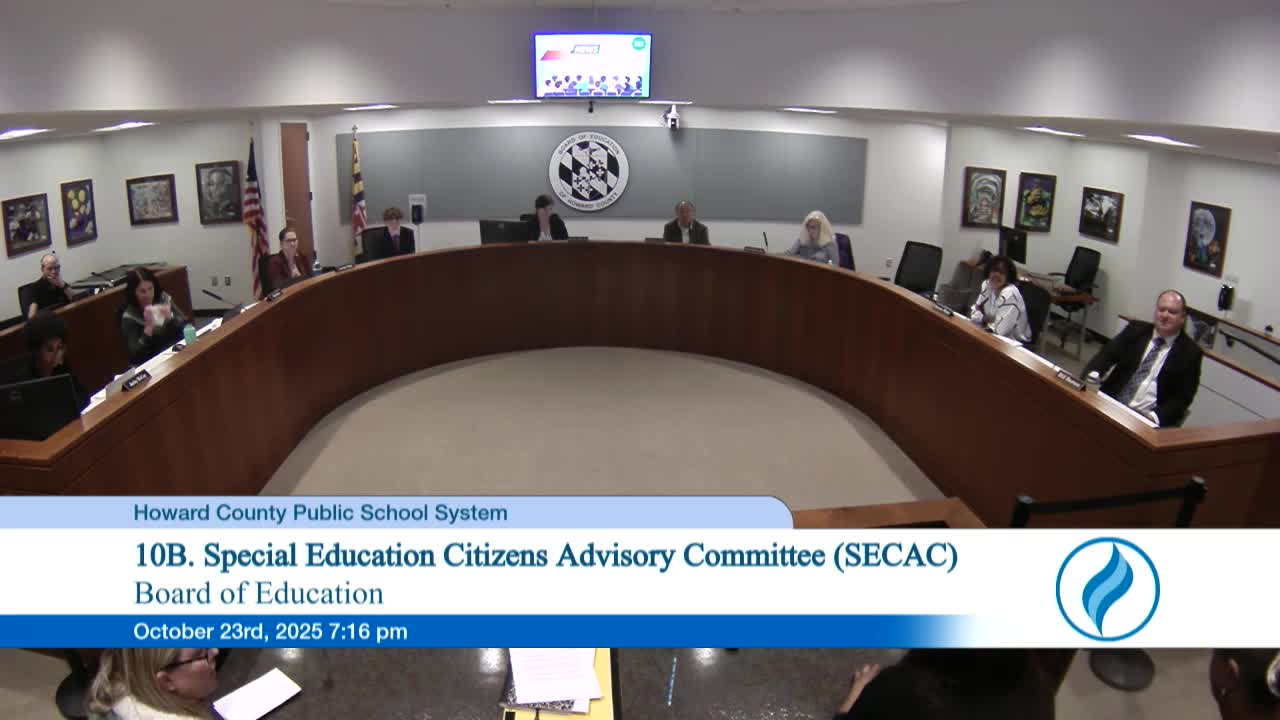
Special-education advocates and union representatives urged Howard County school leaders on Oct. 23 to publish clearer, program-level spending and outcome data, and said a restraint report shows an increase in restraints and disproportionate use on African American students.
Community advocates for students with disabilities and representatives of the Howard County Education Association used Oct. 23 testimony to press the Board of Education for more transparency and stronger supports for special education and operations staff.
Restraints and special-education transparency: Members of the county—s Special Education Citizens— Advisory Committee (CCAC) and other advocates said recently released data show restraints are up about 20 percent from the prior year and remain disproportionately applied to African American students. A CCAC presenter said the incident-rate ratio shows African American students are restrained at roughly seven times the rate of white students in the most recent year and raised a compliance concern: the report shows required IEP meetings after restraints are held only about 56 percent of the time.
CCAC called for more transparent, program-level accounting of special-education funds and stronger program development so students disproportionately placed in non-public settings can receive services in-district. "Show us the money isn't just a catchy phrase. It's a demand for accountability," a CCAC speaker told the board.
Training and professional learning: The Howard County Education Association noted recent attendance figures for an academic professional-learning day (87 percent attendance for eligible staff) and urged the district to target training resources toward staff working with students who receive special-education services, including safety and de-escalation training at hire and ongoing modules for new staff.
Custodial and maintenance staffing: An educator who described herself as a moderator of a parent forum testified that cuts to custodial staffing and a regional support policy implemented April 2 have left many buildings understaffed; she reported clogged sinks, persistent temperature extremes in classrooms, overflow trash and delayed work orders. The speaker urged the board to restore overtime coverage and increase pay for trades positions (plumbing, HVAC, electrical) to attract qualified hires and to address a backlog of maintenance requests.
Staff response and next steps: District leaders acknowledged the concerns and described actions in progress (training pilots, a new sufficiency study for facilities, and continuing conversations with county agencies on sidewalks and safe routes). CCAC said it will return with recommendations and noted an upcoming CCAC meeting with an outside expert on restraint reduction.
Ending: Advocates asked the board for concrete deliverables — itemized spending reports for special-education funds, evidence of outcomes for students who are restrained or placed out-of-district, and a staffing plan for custodial and trades positions. The board and central office said they would follow up with requested datasets and with further briefings.