Get Full Government Meeting Transcripts, Videos, & Alerts Forever!
Get email alerts on the Ambulance Billing topic
No spam. Unsubscribe anytime.
Council raises Springdale EMS customary billing rate; chief says increase needed to cover rising costs
Summary
Springdale adopted an ordinance adjusting the city’s ambulance billing to 200% of the Medicare ambulance fee schedule after a staff presentation citing rising costs and a statutory change to the minimum recoverable amount. Council voted 8–0 to approve the ordinance.
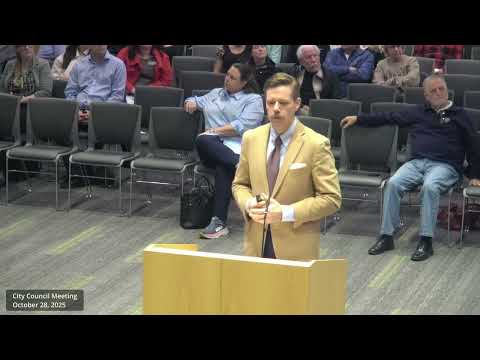
Springdale City Council approved an ordinance on Oct. 28 to change the city’s customary ambulance billing rates to 200% of the Medicare ambulance fee schedule. Fire and emergency medical services staff said the change is intended to keep collections in line with the cost of 24/7 ambulance operations.
Fire department leadership explained that the Centers for Medicare and Medicaid Services sets an ambulance fee schedule that typically does not cover the full cost of operating an ambulance service. The chief said a recent change in state law (effective July 1, 2025) altered the minimum recoverable benchmark and that the department has not adjusted its customary billing rate since 2014. He said the proposed new rate—200% of the Medicare ambulance fee schedule—reflects a necessary adjustment to support staffing, vehicles, durable medical equipment and 24/7 readiness. "If it were practical to provide ambulance service for free, that's what we would do, but it's not," the chief said.
Staff noted payer mix statistics: approximately 87% of billable transports are billed to insurance and 13% are self‑pay; historically the city collects a low share of outstanding self‑pay balances. Staff described the city’s billing and collections process: initial bills are sent within days of transport, accounts incur late notifications after 30 days, and unpaid balances move to collections after 90 days.
Council members asked about frequent users and collection practices. The chief said the department would continue to work with collections and that most revenue comes from insurers. The ordinance passed on a recorded vote, 8–0.
The ordinance increases the city’s customary billing rate for ambulance services; the council also acknowledged that 10% of EMS revenues are moved into an equipment replacement fund. The change does not alter emergency response protocols or dispatch procedures but is intended to improve the financial sustainability of the city’s EMS operations.