Get Full Government Meeting Transcripts, Videos, & Alerts Forever!
Get email alerts on the Election Law topic
No spam. Unsubscribe anytime.
Republican solicitor urges scheduled legal reviews for undated mail ballots; Democrats point to Aiken precedent
Summary
At the Oct. 31 Board of Elections meeting, Republican solicitor Dolores Troiani asked the board to schedule legal reviews so attorneys can be present when undated mail‑in ballots are examined. Democratic counsel Joel Benecke said appellate precedent (Aiken) treats missing or incorrect dates as de minimis and supports counting those ballots.
A dispute over how to handle mail ballots that lack a date or contain date errors surfaced at the Chester County Board of Elections meeting on Oct. 31, when party solicitors asked the board to set predictable legal‑review windows during central canvassing.
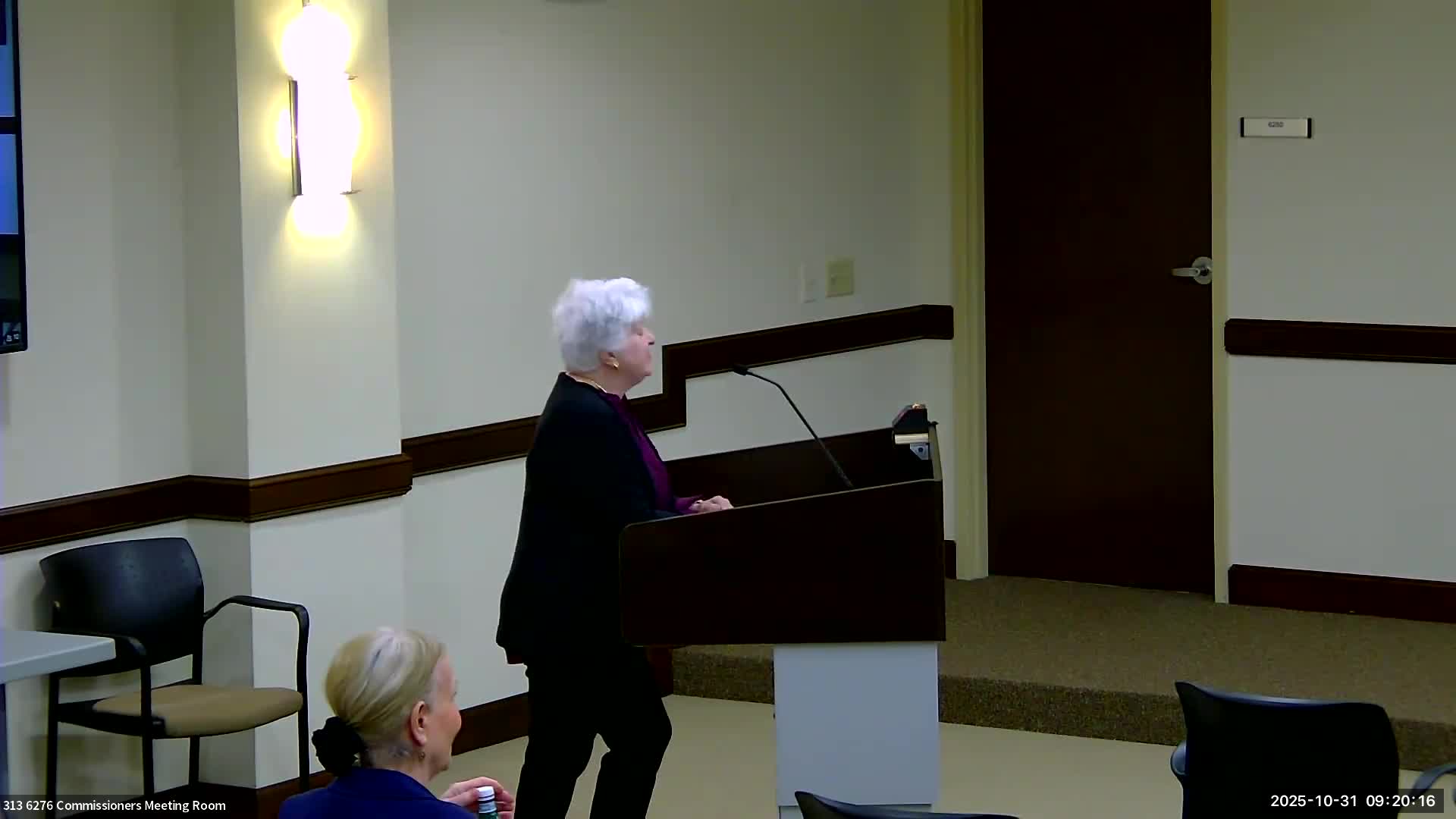
Dolores Troiani, solicitor for the Republican Party of Chester County, told the board she had sent a letter raising "objections" to current practices and asked that legal reviews be scheduled at set times so party lawyers can be present to lodge objections. Troiani cited recent case law and said the Republican Party was concerned that ad hoc legal reviews could occur when opposing counsel were not available to object.
"If you don't set a specific time, then a legal review will be done when maybe there's no Republicans there and no one to lodge an objection," Troiani said, asking the board to consider set review periods and arguing that party representatives need reliable notice.
Joel Benecke, co‑solicitor for the Democratic Committee, responded that existing appellate precedent supports counting ballots with date errors. He cited the Aiken opinion and said it treats an incorrect or missing date as a de minimis defect that should not invalidate a ballot, and that the court's reasoning remains in force alongside other opinions the parties referenced.
Other party lawyers present told the board they can and do staff canvass periods to monitor proceedings; one attorney said the process has been used for years and that parties have attorneys prepared for canvassing and provisional‑board proceedings.
The board did not change its process during the meeting. Members of the public urged caution about counting ballots while litigation is pending and suggested delay if court matters remain unresolved. The board recorded routine appointment motions by voice vote but did not adopt any new legal procedures at the Oct. 31 meeting.