Get Full Government Meeting Transcripts, Videos, & Alerts Forever!
Get email alerts on the Transportation Micromobility topic
No spam. Unsubscribe anytime.
Hastings staff brings redlined e-bike ordinance; council requests safety tweaks and education plan
Summary
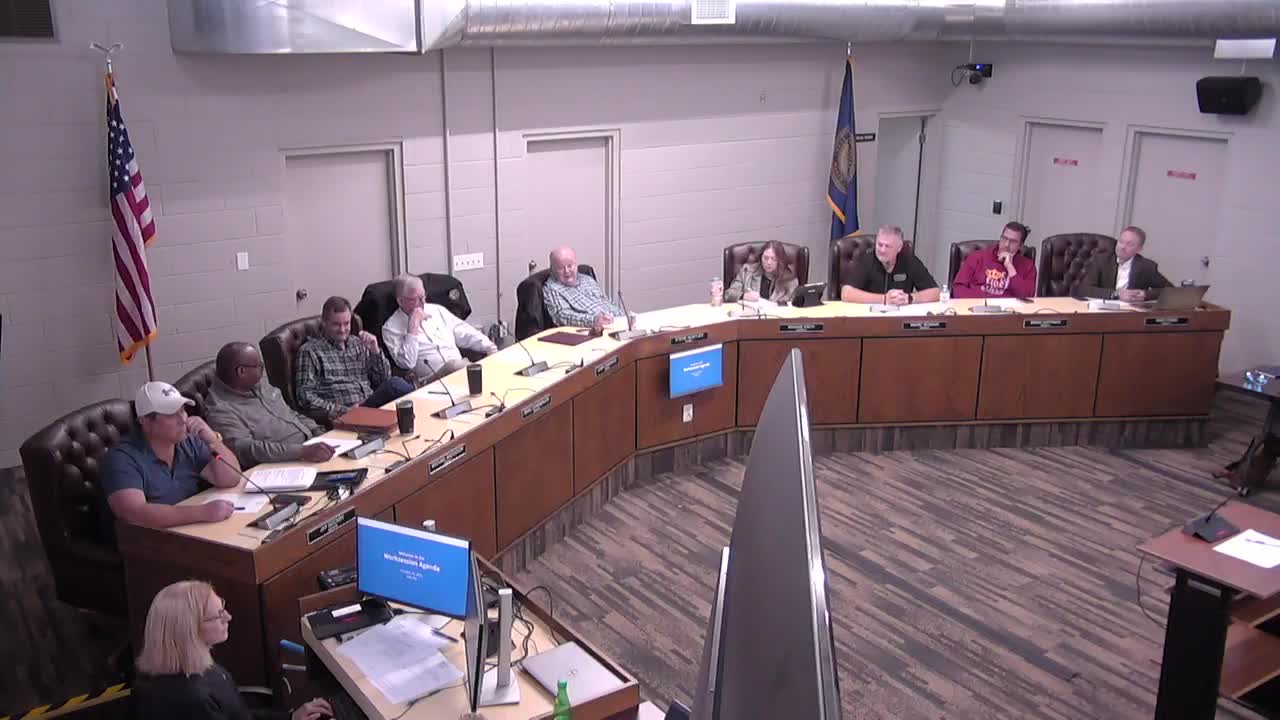
City staff presented a revised ordinance at a Hastings City Council work session on 2025-10-20 that would regulate e-bikes, e-scooters, hoverboards and similar devices, including a downtown exclusion and a 25-mph cap on roadways.
City staff presented a revised ordinance at a Hastings City Council work session on 2025-10-20 that would regulate e-bikes, e-scooters, hoverboards and similar low-speed personal devices. The draft includes a business-district exclusion, definitions of device classes, a blanket prohibition for operation on roadways with posted speed limits greater than 25 miles per hour, and permission to use trails unless use is expressly prohibited by posted signage.
"We added a specific definition of e bike, ... these ebikes hoverboards, lightweight escooters, will not be permitted on any roadway that has a posted speed limit of ... greater than 25 miles per hour," staff presenter Jesse Oswald summarized, outlining the draft’s core safety elements. The draft also would require groups of three or more devices to travel in single file on trails to reduce impediments to other users.
Councilmembers raised several safety and enforcement issues. Several members asked staff to lower the allowable trail speed (some suggested 15 mph instead of 25 mph), require front and rear lights or reflective materials for low-light operation, and add clearer helmet-education or distribution measures for younger riders. Oswald said the city and police had vetted the draft and that police had been involved in developing the language; he and police staff emphasized an education-first approach in schools and noted an officer-led helmet-distribution program had been discussed.
On signage authority, staff said locations where trail use would be expressly prohibited would come before council for approval. Councilmembers also asked for practical implementation details, such as permissible startup time between ordinance adoption and device-programming changes by vendors and operators.
Council indicated it wants staff to return with edits addressing speed limits on trails, lighting/reflectivity requirements for low-light operation, clearer enforcement language and an education plan to be deployed in area schools. The mayor requested the ordinance be placed on a future council meeting agenda for a formal vote after staff incorporates the requested changes. No ordinance vote occurred at the work session.
The discussion emphasized public-safety goals and the importance of balancing access for commuters who rely on micro-mobility devices with pedestrian safety in downtown and on multi-use trails.