Get Full Government Meeting Transcripts, Videos, & Alerts Forever!
Get email alerts on the Taxes Restaurant topic
No spam. Unsubscribe anytime.
Hastings council asks staff to draft restaurant-tax ordinance, leans toward 1%
Summary
City staff presented revenue estimates and legal guidance on a proposed local restaurant tax; council members generally supported directing staff to draft an ordinance and to return with clarified taxable categories, collection mechanics and implementation timing, with several members favoring a 1% rate as a starting point.
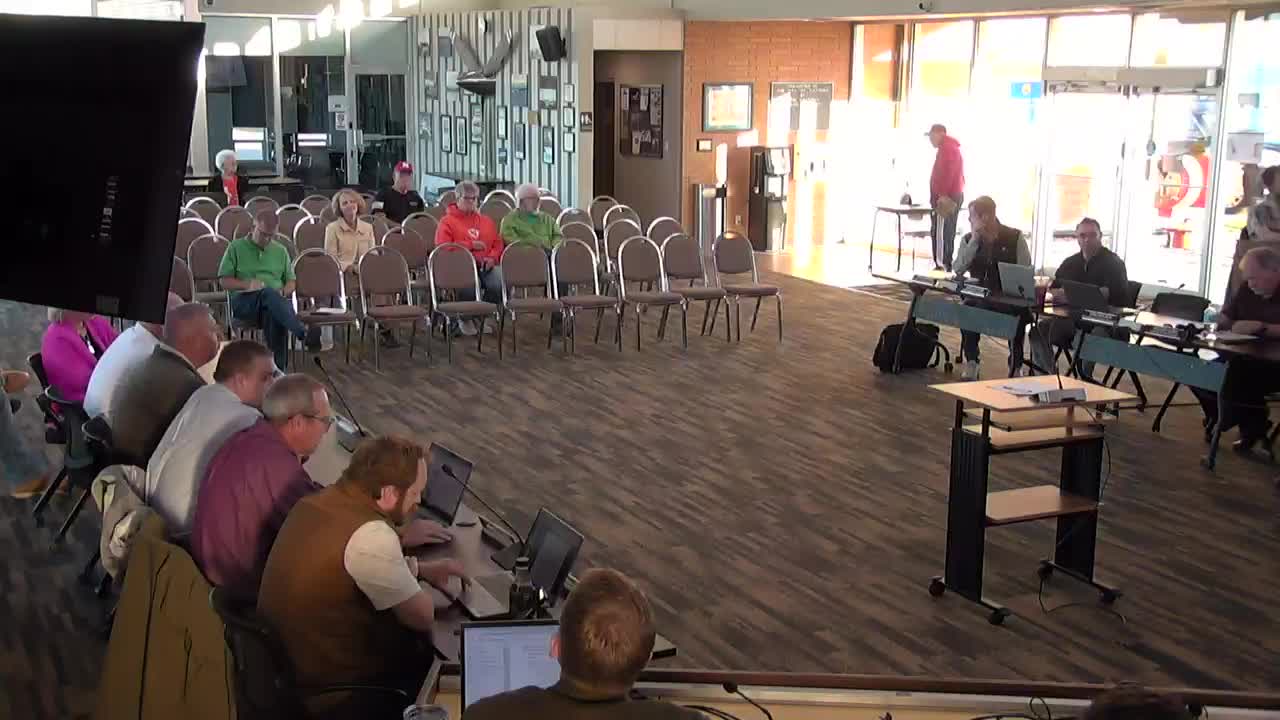
At a Hastings City Council work session on 2025-10-20, council members directed staff to draft an ordinance for a local restaurant tax and return with more detailed analysis, including taxable categories, exemptions and implementation timing. The council signaled a preference to start at 1% on a trial basis while staff prepares a formal ordinance and outreach plan.
The proposal was presented by Jesse Oswald, city staff, who said the restaurant tax is one of several revenue options requested during the budget process and that the city needs direction on whether to pursue it and, if so, at what percentage. "That is one of the good things about the restaurant tax ... It is allowed to go just to the general fund, to be spent, how council ultimately would dictate through the adoption of the budget process," Oswald said, explaining the levy-flexible nature of the revenue.
Council discussion focused on several practical items: how the tax would be collected, which categories of prepared food would be subject to the tax, whether school cafeterias or booster-club concessions are exempt, how food trucks would report sales, and a likely implementation timetable. Staff said the Nebraska Department of Revenue supplied the net taxable-sales data used for the initial revenue estimates and that the department can provide finer breakdowns if council asks.
The mayor, who identified himself as a restaurant owner, reported having heard concern from local restaurateurs and bar owners that an added tax could reduce customer visits. "They're not a fan of it. They're scared of the fact that it may ... cause people ... to go out less," he said, while also urging councilmembers to weigh the city's fiscal needs.
Proponents on the council stressed the distributional argument that the tax primarily falls on people who choose to dine out and that a portion of the spending taxed is from visitors. One councilmember summarized the estimated impact: a 1% restaurant tax in the city's revenue scenario would generate roughly a half-million dollars a year — an amount that, for example, could help fund an airport hangar — but staff and others cautioned the tax would not erase a multi-million-dollar general-fund shortfall.
Legal and procedural questions were also raised. Oswald told the council that a prior state requirement to submit a restaurant tax to voters if expected annual revenue exceeded $700,000 was removed under recent state changes, and therefore the city would not be required to place this ordinance before voters; the council retains authority to adopt the tax locally.
Councilmembers asked staff to clarify exactly which business categories the tax would cover (cafeterias, concessions, vending, mobile vendors) because the state assigns reporting categories and some entities — like school districts or booster organizations — may be treated differently. Staff said the Department of Revenue's category definitions were used to create the initial estimates and that staff would return with specifics.
Discussion ended with consensus direction for staff to draft a formal ordinance, gather more precise taxable-sales data, consult with affected local businesses, and return to a future work session or council meeting. Several councilmembers favored starting the rate at 1% with the option to adjust during the budget process.
The council did not take a formal vote on an ordinance at the work session; the action recorded from the meeting is a staff referral to draft and return with a proposed ordinance and implementation details.