
Court hears dispute over repurchase statutes and whether state can claim immunity after acquiring property
Get AI-powered insights, summaries, and transcripts
Subscribe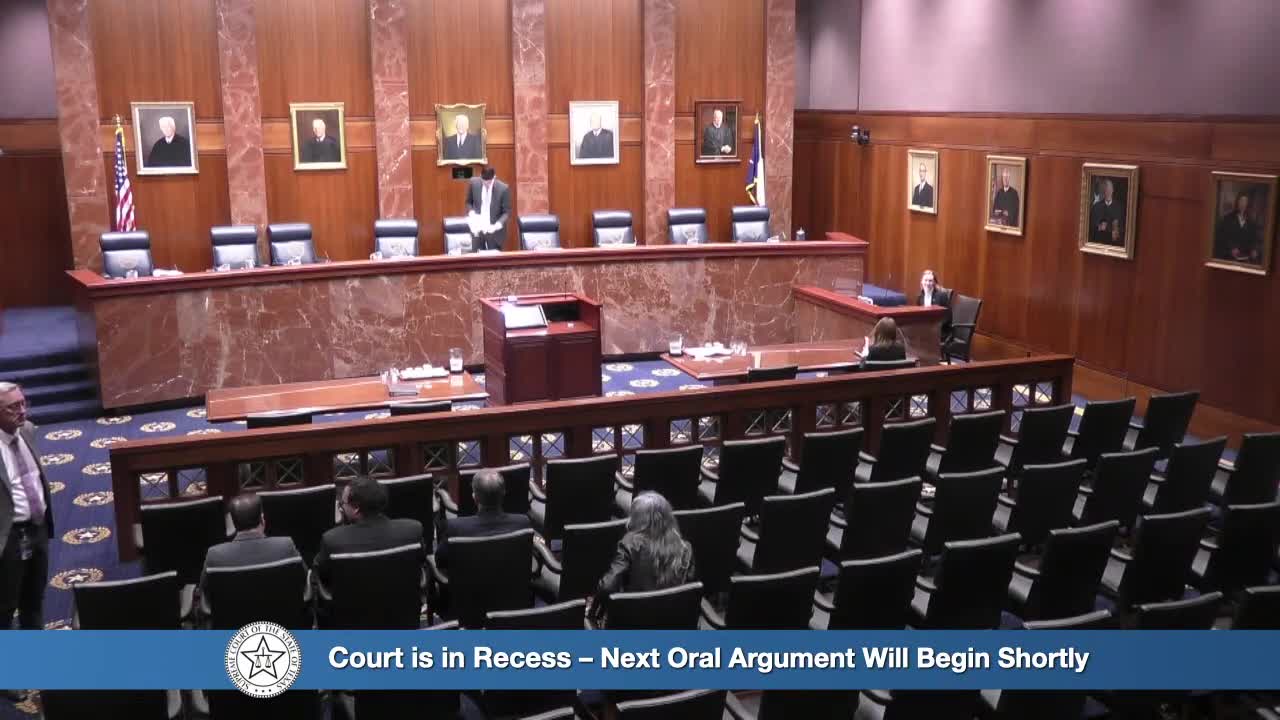
Summary
In State of Texas v. JRJ Pusak Holdings (No. 240447), the court considered whether chapter 21 repurchase statutes apply where the state obtained land by deed following an offered settlement tied to a threat of condemnation, and whether sovereign immunity bars the landowner’s claim.
The Supreme Court considered whether the state waived sovereign immunity for a repurchase remedy where the state acquired land after initiating condemnation-related proceedings but effected the transfer by deed rather than by final condemnation judgment. Counsel for the State argued the legislature did not clearly and unambiguously waive sovereign immunity in the repurchase statutes for the facts here; the State urged that the statutes apply to property acquired through eminent domain and that the repurchase remedy is not an automatic contractual right when property is sold by deed.
Respondent counsel (Mister Zagrodsky) described the policy purpose of chapter 21 — protecting private property and limiting governmental land banking — and argued that the statutory framework and constitutional provisions that guard against takings without public use require that owners have a statutory remedy if the property is no longer needed for public purposes. He told the court chapter 21 imposes a specific disposition process and that the State should not be allowed to invoke sovereign-immunity defenses to avoid the repurchase remedy after it has used eminent-domain procedures or their equivalent to obtain property.
Justices focused on textual questions (including references at argument to §21.101(c) and to whether the statute’s language requires a condemnation petition or instead applies to acquisitions made after an initiated condemnation effort). The bench also tested hypothetical policy consequences and alternatives: should owners receive a contractual remedy, an ultra vires enforcement path, or a waiver plainly stated in statute? No final ruling was announced from the bench.