
Wake County strategic-plan update: graduation rate 90.7% and K–2 literacy growth flagged as a concern
Get AI-powered insights, summaries, and transcripts
Subscribe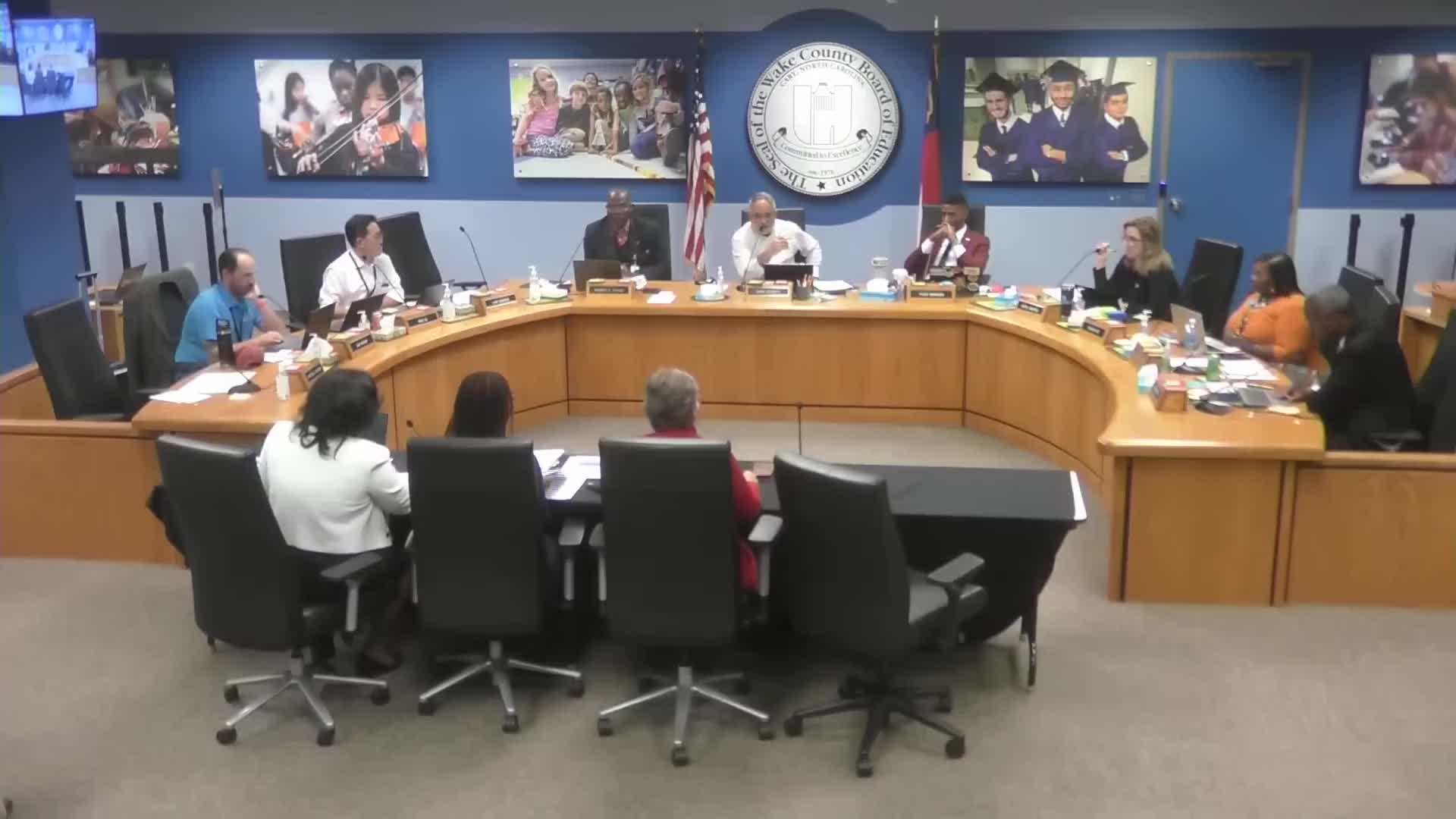
Summary
District presenters reported a 90.7% four-year graduation rate, 64.4% grade-level proficiency districtwide, and that 49% of schools exceeded statewide average academic growth. Early literacy (K–2) growth indices were negative and staff highlighted targeted supports including an instructional-leadership cohort for low-performing schools.
At the start of the strategic-plan update, Dr. Robinson framed the plan as a product of broad community engagement and reiterated the plan's pillars—excellence, equity, engagement and innovation—and its measurable goals for graduation, proficiency and growth. He told the board the update would review goals and metrics, focus on operational effectiveness and preview future deep dives.
On key metrics: "Our overall graduation rate is 90.7 percent," Dr. Robinson said. Staff reported districtwide grade-level proficiency (GLP) at 64.4 percent and noted large disparities among student groups. The district also reported that 49 percent of schools exceeded the statewide average for academic growth; roughly 74 percent of schools met growth expectations overall.
Early literacy: staff raised a substantive concern about K–2 early-literacy growth. Using district-calculated indices tied to DIBELS and other early assessments, presenters reported growth indices of about -16.22 in kindergarten, -6.01 in first grade and -10.4 in second grade. Dr. McMillan explained that DIBELS benchmarks are nationally normed and that students who are "at benchmark" at grades K–2 still have a comparatively lower probability of later proficiency than students who score "above benchmark," citing that students above benchmark pass the Grade 3 reading assessment at a substantially higher rate.
District responses and supports: staff described targeted strategic responses: a 15-school instructional leadership cohort for low-performing schools, coaching for principals and assistant principals, and classroom-focused practices such as standards-driven instruction, high-impact instructional strategies and teaching studies. Dr. Hill described the cohort as professional development for principals and assistant principals paired with central-office coaching to strengthen instructional leadership.
Staff also described a systematic superintendent's leadership-team (SLT) data-review process to break down silos: departments present comprehensive, timely metrics to each other so that supports and management actions are coordinated. Presenters cautioned that two federal grants (school-based mental health and a teacher/school-leadership incentive grant) had concluded and that sustaining some services will require local funding decisions.
Board questions and next steps: board members asked for more detail about curriculum review timelines (staff described a typical 5–7 year cadence tied to state standards), the practical limits of available curriculum choices and how the district is using positive outlier schools to identify promising practices. Staff said they will return with more detailed curriculum and programmatic updates in future deep dives and scheduled work sessions to continue the discussion.
Ending: presenters and board members agreed to continue deep-dive sessions on curriculum, student disposition/well-being and operational effectiveness; staff will create follow-up materials on K–2 literacy trends and on how the district is scaling tutoring and other supports.