Get Full Government Meeting Transcripts, Videos, & Alerts Forever!
Get email alerts on the Capital And Cte Funding topic
No spam. Unsubscribe anytime.
Committee explores reinvesting CTE tuition revenue and updates turf/track replacement plan
Summary
Members discussed options for dedicating a share of out‑of‑district CTE tuition revenue to CTE capital and program needs—options ranged from a recurring budget line to an enterprise‑style fund—while staff updated the committee on turf/track replacement planning and current assigned funds.
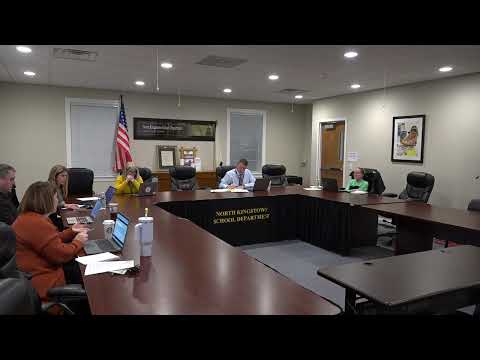
Committee members on Nov. 3 raised the idea of dedicating a portion of revenue generated by out‑of‑district tuition for career and technical education (CTE) back to CTE capital and program needs.
The discussion, led by Director of Finance Leslie O'Powell and committee members, outlined several possible approaches: (1) create a recurring operating expense line dedicated to CTE capital (budgeted annually), (2) set a lagging, backward‑looking percentage of prior‑year CTE tuition to set aside for capital, (3) create an enterprise‑style fund or dedicated assigned fund balance that carries from year to year, or (4) set quarterly estimates and reserve a portion as revenue arrives. O'Powell noted the district already receives Perkins and other categorical grants that must be tracked and used for specific CTE purposes, and she said staff can design scenarios that mirror how the district tracks other restricted funding.
Proponents said a predictable funding stream would help sustain existing CTE programs and pay for equipment depreciation (for example, culinary kitchen upgrades and robotics equipment lifecycle costs) and could make it easier to start new CTE offerings. O'Powell said there are tradeoffs: creating an enterprise‑style fund or a restricted assigned balance carries rules and administrative overhead and the school committee retains authority to reassign fund balance if it chooses.
On long‑term capital, O'Powell reported outreach to PAR Corporation and vendors to estimate costs for the turf and track replacement; staff and the athletic department are evaluating options including using pellets instead of wood chips for infill, which would increase cost but improve field safety and drainage. The committee reviewed assigned funds showing approximately $9.25 million on the fund balance report when combining lines the staff identified (an $8.50M base, a $0.75M allocation for FY26, and an additional $0.15M town capital contribution); staff said a shortfall remains likely and recommended continued planning with a target replacement window around 2028–2030.
Members asked staff to return with concrete scenarios for dedicating revenue to CTE capital, including pros and cons for an operating budget line versus an assigned/reserved fund, and to continue vendor outreach and cost estimates for turf/track replacement.
Ending: Staff said it will draft options for the committee to review during the FY27 budget planning process and will continue to refine cost estimates for the athletics field replacement.