Get Full Government Meeting Transcripts, Videos, & Alerts Forever!
Get email alerts on the Quarterly Financials topic
No spam. Unsubscribe anytime.
Finance director: FY25 shows $673,378 above budget; committee debates moving recurring costs out of fund balance
Summary
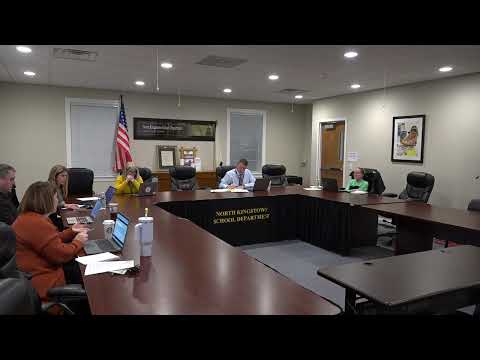
Leslie O'Powell, North Kingstown’s director of finance, told the Budget and Finance Advisory Committee on Nov. 3 that unaudited FY25 results show $673,378 in additional revenue—largely investment earnings and out‑of‑district CTE tuition—and outlined how audit entries and encumbrances affect reported revenues and expenses.
Leslie O'Powell, North Kingstown’s director of finance, presented quarterly financial reports Nov. 3, telling the Budget and Finance Advisory Committee that the district’s unaudited FY25 close shows $673,378 more revenue than budgeted, driven principally by investment earnings and tuition from other local education agencies for the district’s CTE programs. O'Powell also said additional Medicaid reimbursements helped the variance.
O'Powell described the FY25 close as an unaudited budget‑to‑actual statement that does not reflect final audit adjustments to fund balance. She explained that some revenue lines now show zero because audit entries moved amounts—specifically a 15% capital reserve allocation—out of the general operating presentation and into separate capital or enterprise accounts. For example, rental receipts are recognized in enterprise fund 2408; the enterprise fund records revenue and corresponding maintenance expenses and only after audit will profits or losses be shown in the general fund reconciliations.
A community member asked why rental income appears as zero in the report; O'Powell replied that the district’s accounting recognizes the 15% capital allocation separately and that the remaining revenue is recorded in fund 2408 where it offsets maintenance costs, with the net result reflected in audited financial statements. She offered to provide a year‑end report on fund 2408 or to include a quarterly enterprise fund report if the committee wants regular updates.
On the expense side, O'Powell highlighted variances in salary and benefits caused largely by unfilled positions (including teaching, psychologist and ESP roles). She said she is projecting payroll after each pay cycle and monitoring positions closely to assess whether changes to budgeting assumptions are needed for the FY27 budget cycle. O'Powell also explained a negative $347,000 variance in the equipment line, attributing it to the purchase of two buses and additional facilities vehicles; the committee had chosen to pay for those vehicles from available operating dollars rather than financing or drawing down fund balance.
Committee members debated the role of fund balance in covering recurring items such as playground work and Chromebook replacements. One member argued that recurring maintenance and replacement items should be budgeted annually in the operating budget to avoid repeatedly relying on surplus or fund balance. O'Powell said the district has assigned capital lines based on prior CIP decisions but that the school committee may reassign fund balance items; she suggested these are topics to address in the FY27 budget process.
A member asked for more detailed reporting at the 4‑ or 5‑digit object/POCOA level to make analysis easier; O'Powell said the detailed reports are available and are provided to the auditor and that she can share the underlying object‑level detail upon request.
The director characterized FY26 as early in the fiscal year but said current tracking indicates the district could finish roughly on budget or with a small surplus after accounting for planned transfers and reappropriations. O'Powell added a line showing reappropriations (including a $500,000 reappropriation already recorded) to make those decisions transparent in ongoing reports.
The committee voted later in the meeting to take a motion back to the school committee to revisit whether the task of identifying reappropriation reductions should remain assigned to the advisory committee or be absorbed into the regular FY27 budget process.
Ending: The advisory committee wrapped the quarterly reports and returned the meeting to the chair, with further budget work expected in the months ahead.