District safety coordinator details layered protocols and security options including metal detectors
Summary
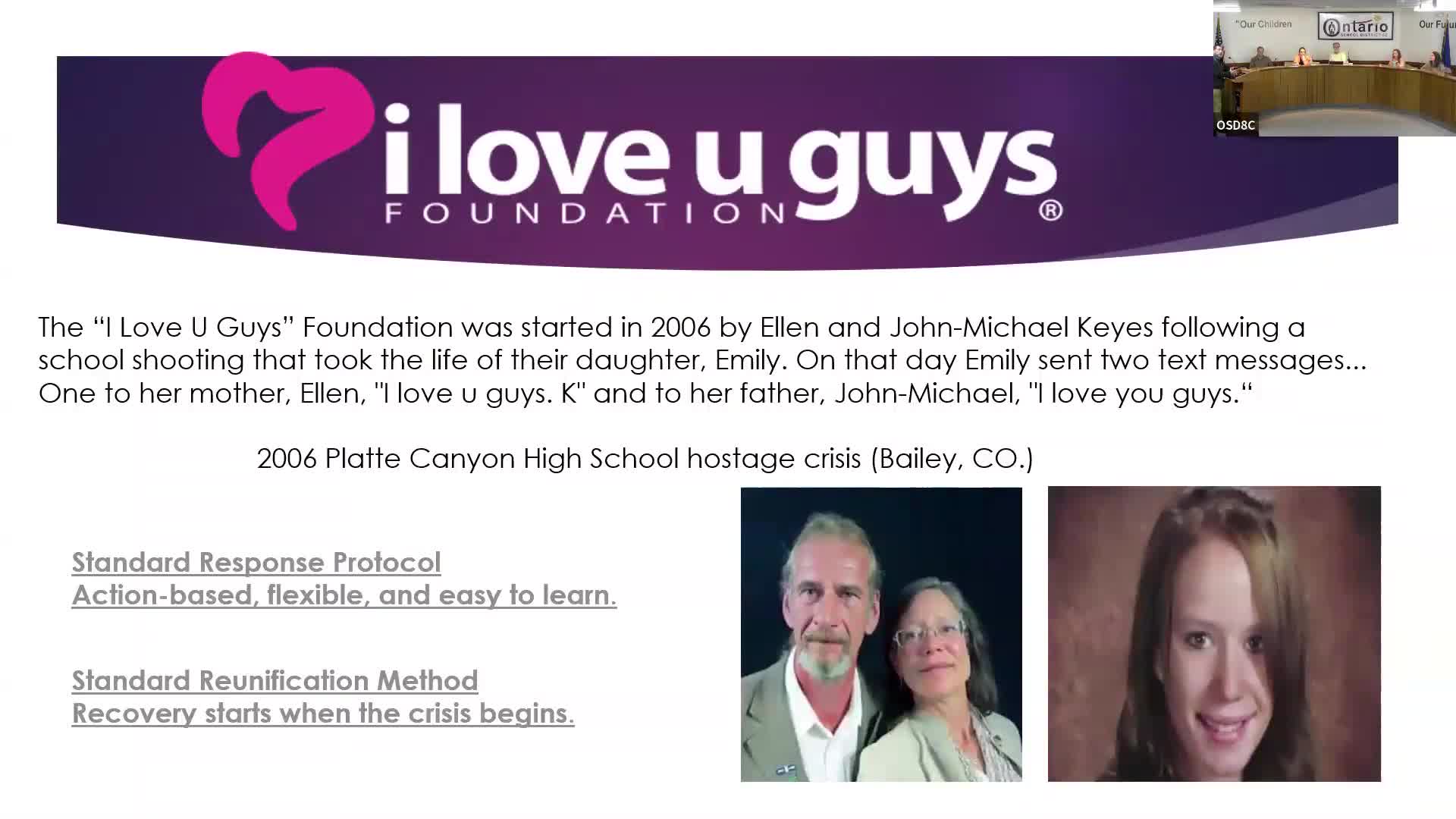
Mike, the district safety and training coordinator, told the board the district has worked to standardize emergency language and response procedures and has adopted the I Love You Guys Foundation protocols.
Mike, the district safety and training coordinator, told the board the district has worked to standardize emergency language and response procedures and has adopted the I Love You Guys Foundation protocols. "This is our emergency action plan," he said, describing mandatory drills and the written action plans posted at schools.
The nut of the presentation was that the district has layered its safety approach rather than relying on any single measure. Mike described improvements made since a 2022 swatting incident, including a reunification site, clarified staff assignments and upgraded district communications. He said the district now provides base radios to front-office staff and uses a radio channel for urgent coordination when phone lines are overloaded.
Board members heard specifics about potential new technology and the trade-offs involved. Mike presented three options for detecting weapons at building entries: an Evolve Express concealed-weapons detection system he estimated at about $90,000 per entry; a conveyor-belt metal-detection system that could roughly double that hardware cost; and a lower-cost policy option such as requiring clear backpacks. He also reviewed a camera-based weapons-detection product but said it currently misses concealed firearms and is not at the reliability level the district would accept.
In the discussion that followed, board members and principals raised questions about staffing, the visibility and welcome of school entrances, and how to phase any hardware investments. Staff emphasized that equipment costs are only part of overall implementation: any entry-screening solution may require additional staff time to operate and monitor. Mike and other administrators said existing non-hardware measures — locked interior doors, staff vests for visible supervision, SRO activity and regular drills — are intended to ‘‘slow people down’’ and buy time for first responders.
The board did not take formal action on specific security purchases. Administrators said they will continue evaluating options, estimate full implementation costs (including staffing) and return with more detailed proposals and budget figures for future board consideration.