Audit flags material cash reconciliation weakness after Tyler go‑live; committee to track corrective plan
Loading...
Summary
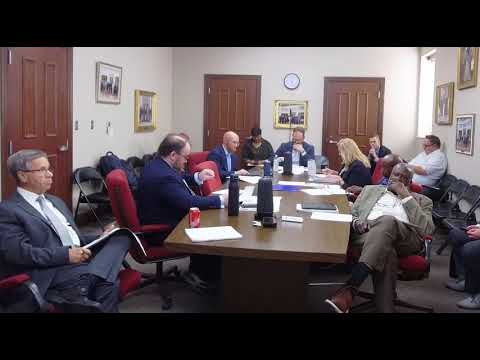
At a meeting of the Jackson City Audit Committee, the city’s external auditor reported a material weakness in cash reconciliations following the city’s November go‑live of its new accounting software, and outlined several other year‑end reporting and control concerns.
At a meeting of the Jackson City Audit Committee, the city’s external auditor reported a material weakness in cash reconciliations following the city’s November go‑live of its new accounting software, and outlined several other year‑end reporting and control concerns.
The auditor, Mr. Bence, said the implementation moved the city to a pooled‑cash ledger but that receipts and disbursements were not consistently routed into the pool. "When you ran the pool, it showed the city had negative $8,000,000 cash because all the receipts weren't flowing through the pool," he said. Auditors and staff identified and posted about $13,000,000 of adjustments to reclassify deposits into the pool so balances would reflect true cash ownership.
Why it matters: the misroutings and manual entries made monthly bank reconciliations unreliable, contributed to delayed audit completion, and created a risk that the financial statements could have been materially misstated without auditor intervention. The auditor characterized many of the revenue‑recognition and expenditure issues as year‑end cutoff problems but said they are important to resolve to obtain a clean opinion going forward.
Other findings and examples included: a timekeeping abuse case involving a single employee covering 2019–2022 where the auditor reported roughly $30,000 in improper payroll and benefits and said restitution and disciplinary steps were taken; repeat issues in quarterly reporting to the U.S. Department of the Treasury where reports were prepared on purchase orders rather than actual disbursements and will require true‑ups; and three instances in federal program control testing where supporting approvals could not be located, which exceeded the acceptable error rate for testing.
On governance and remediation, the auditor recommended that the audit committee set an annual internal‑audit plan and budget, and direct internal audit to test processes such as bank reconciliations and accrual close procedures. The auditor said management should prepare a specified corrective‑action plan that assigns responsibilities and deadlines; Nathan (city finance staff) was identified in the discussion as the person who would develop that plan and provide follow‑up. The committee discussed short‑term consulting help or temporary staff to accomplish the clean‑up and training without jeopardizing independence.
The auditor also warned of an accounting standard change effective next fiscal year (GASB Statement No. 101) that broadens the scope of compensated‑absence liabilities to include additional carryovers such as sick time; the auditor estimated that Jackson City’s liability could increase meaningfully and gave an illustrative range of about $750,000 to $1.5 million based on preliminary work.
Committee members and staff asked for details and follow‑up. The auditor offered quarterly continuing education and said an advisory team can assist with operational assessments and internal‑audit planning if the committee chooses to pursue that option without compromising external‑audit independence. The committee directed staff to develop the corrective‑action plan, to have internal audit spot‑check month‑end reconciliations, and to bring consultant options and budget implications back to the committee for consideration.
The meeting closed after committee members agreed to forward December agenda items to Chairman Robinson and moved to adjourn; no roll‑call vote or tally was recorded in the transcript.