Panel debates whether jurors seeing handcuffed defendant required reversal in Commonwealth v. Pacheco
Loading...
Summary
In Commonwealth v. Pacheco the defense argued a videotape shown to jurors that depicted the defendant in restraints prejudiced the trial; the court questioned whether the trial judge had an obligation to address the restraint on the record or to give a curative instruction sua sponte.
The Appeals Court questioned whether a trial judge must address on the record the prejudicial effect of showing jurors a recording that depicts a defendant handcuffed during police interrogation and whether failing to do so could be structural error.
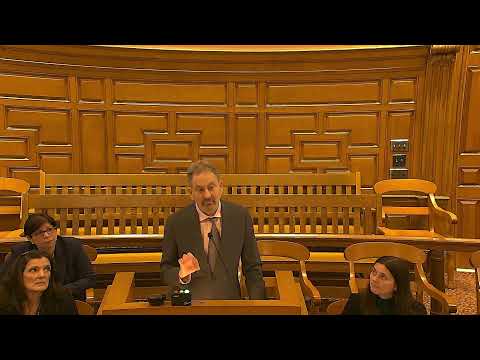
Attorney Jennifer Peterson told the panel the visible restraints were 'highly prejudicial' and argued the trial judge had a duty to protect the defendant's right to a fair jury by either excluding the restraint from the exhibit or giving a curative instruction. The justices probed whether defense counsel's failure to object at trial altered the applicable standard of review and asked whether the error was forfeited, waived, or a structural error requiring automatic reversal.
The Commonwealth's attorney argued the videotape was admissible as a party-opponent statement and that defense counsel expressly declined to object at sidebar and even elicited testimony noting that the defendant was shown in custody. Counsel also noted the judge had invited and discussed a curative instruction during trial and that the defense did not request the instruction.
The panel extensively discussed Bonnet (a precedent the parties cited) and whether recordings taken at a police station showing a defendant in restraint must be excluded categorically or assessed under the usual probative-versus-prejudicial balancing. The court did not announce a ruling; the matter was submitted after argument.