Appeals court questions trial record on defendant'led defense and access to CODIS data in Commonwealth v. Hempel
Loading...
Summary
The Appeals Court heard argument over whether the trial court deprived a defendant of the right to counsel by encouraging him to represent parts of his defense, and whether CODIS DNA analysis should have been disclosed to defense counsel.
The Appeals Court heard argument over whether the trial court deprived a defendant of the right to counsel when it encouraged him to question witnesses and make a closing argument, and whether the defendant or his counsel were entitled to access CODIS database analysis relating to DNA evidence.
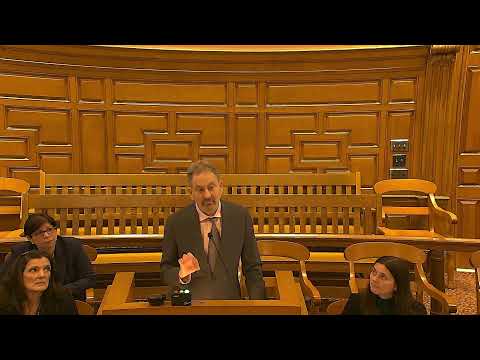
Defense attorney Joel Goldblatt told the panel the judge''encouraged the defendant to 'take over his own defense' and question witnesses rather than explain that counsel decides which witnesses to call. The bench pressed whether the record contains the sort of colloquy that the Supreme Judicial Court and federal precedent treat as necessary to show an intelligent, voluntary waiver of counsel. Justice Brennan framed the central issue as whether the trial judge 'put his finger on the scale' by persuading the defendant to relinquish counsel''a step the defense calls a structural deprivation.
The justices focused on settled legal markers: Faretta/Feretta-style waiver principles, the Barrows/Cody factors and Mitchell/Leyva lines on when a court may allow a defendant to proceed partially pro se. The panel repeatedly asked whether the defendant knew his sentencing exposure at the moment he began questioning witnesses and whether anything on the record demonstrates he understood the disadvantages of self-representation at that time. Defense counsel told the court the record shows the judge'not the defendant'suggested self-representation and that later references to a '20-to-life' exposure may have occurred after the defendant had already taken over parts of the case.
Counsel also asked the court to address an evidentiary question the trial court decided against the defendant: whether CODIS records used in the laboratory analysis should be released to defense counsel. Goldblatt argued the judge erred in treating federal privacy rules as barring disclosure; he said the Massachusetts regulations governing DNA database releases track the federal rule and permit production of potentially admissible evidence in a judicial proceeding.
The Commonwealth (Elizabeth Sweeney) replied that the record shows the defendant was represented for opening, cross-examination, motions and the charge conference and that the judge and trial counsel had repeatedly cautioned the defendant about Rule 3.3 issues when he sought to introduce evidence or testimony the attorney considered perjurious. The panel asked counsel to identify transcript cites that show the defendant appreciated the perils of self-representation and considered the sequence of events across multiple pretrial hearings and trial days.
The court did not announce a decision at argument; the case was submitted for resolution on the briefs and argument.