Get Full Government Meeting Transcripts, Videos, & Alerts Forever!
Get email alerts on the Zoning topic
No spam. Unsubscribe anytime.
Tipp City Council bans automotive fuel sales as a permitted use, allows accessory fueling
Summary
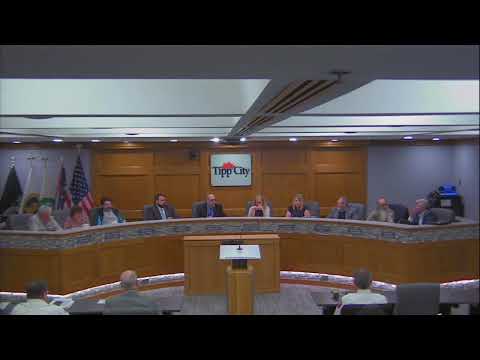
Tipp City Council on Nov. 3 adopted an ordinance that removes automotive fuel sales as a permitted use in all zoning districts while allowing accessory fueling in commercial areas.
Tipp City Council on Nov. 3, 2025, adopted an ordinance to limit the future use of property for automotive fuel sales in the city, amending Chapter 154 of the Tipp City Code of Ordinances.
The ordinance, introduced by Councilmember Greg Slagle and forwarded to council by the Tipp City Planning Board after a Sept. 9 public hearing, removes automotive fuel sales as a permitted use in all zoning districts while allowing fuel sales as an accessory use in commercial areas. Mr. Mack, city staff, described the Planning Board—s review and recommendation to council.
Supporters among council framed the measure as a community planning tool to guide redevelopment along State Route 25A and interstate commercial corridors. "Zoning is about a community plan," President Huffman said, noting that the change is intended to help the city attract businesses other than clustered fuel stations.
Opponents argued the ordinance unduly restricts private property rights and could discourage reuse of sites. Councilmember Kessler said he would vote against the ordinance, asserting that the market should dictate land uses and that the city should buy property if it wants to control future uses. "I don't think it's government's place to tell property owners they cannot sell their property," Kessler said.
Council asked staff whether the ordinance would limit future electric vehicle charging. Matt Spring, planning/staff, said his interpretation of the draft code amendment is that the prohibition targets gasoline and diesel fuel sales and would not bar electric vehicle chargers; he cited an example of a new Wawa site planning for future electric superchargers.
Two members of the public spoke against the ordinance during the public hearing. Tim Logan, a Troy commercial real estate developer, said limits on supply could be unfair to property owners and that the market should determine survivability of businesses. Tim Eshman, a former Tipp City resident, warned higher local prices if supply is limited and estimated potential annual cost increases for residents based on local prices he observed.
On roll call the ordinance passed with six votes in favor and one opposed. Vote recorded: Mr. Slagle — yes; President Huffman — yes; Mr. Liddy — yes; Mrs. Pittenger — yes; Mayor Rogers — yes; Mr. Insulin — yes; Mr. Kessler — no. The ordinance was filed as Ordinance 23-25.
Council and staff noted the ordinance can be revised in the future if circumstances change.