CFO: Atlanta general fund revenues slightly above plan, expenses driven higher by public safety staffing and contracts
Loading...
Summary
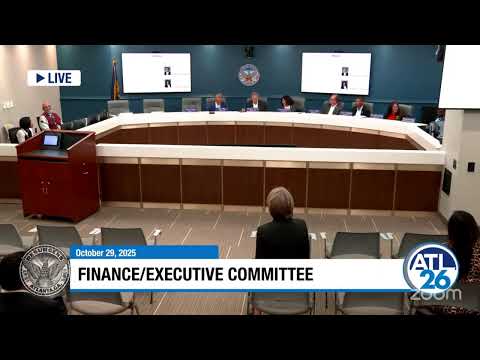
City CFO Hamed Balaji told the Finance and Executive Committee that year-to-date revenues were modestly above budget but that general fund expenses were projected to be about 2.5% over budget, driven primarily by police and fire costs.
Hamed Balaji, the City of Atlanta chief financial officer, told the Finance and Executive Committee on Oct. 29 that year-to-date general fund revenues for the period ended September were modestly above budget, while expense projections had increased, primarily because of personnel and other financing uses.
Balaji said the year-to-date revenue projection was roughly $8 million higher than the budgeted figure, driven in part by stronger-than-expected insurance-premium tax receipts and other revenues; permitting revenue and building rental income lagged expectations. Expense projections were higher by about 2.5 percent, which the presentation attributed chiefly to public-safety spending and contract costs such as new Nova and Axon payments.
The committee focused on personnel costs. Balaji said public-safety staffing and recruiting increases — including larger-than-expected sworn recruit classes — have raised personnel projections for police and fire. Police were projecting roughly $20 million over budget and fire approximately $7 million over budget for the year; other general fund departments showed mixed projections with some surpluses offsetting public-safety overages. Vacancy Review Board data for September showed 27 general-fund approvals and 56 rejections; most approvals were for enterprise funds.
Council members asked whether the personnel overage was driven more by overtime or by salaries and asked for department-level detail on funded vs. filled positions. Balaji said overtime was more in line with last year and that improvements had come from training efficiencies; however, increased sworn headcount was a key factor in this year’s personnel overage. The committee requested a quarterly analysis (October close) and a department-by-department breakdown of positions (filled vs. funded) in the next quarterly report.
Why it matters: A modest revenue upside provides some cushion, but near-term personnel and contract-driven expense pressures — concentrated in public safety — could widen projected deficits if trends continue. Committee members asked administration to identify additional belt‑tightening measures if October quarterly numbers and trends do not improve.
Next steps: Finance will provide a more refined quarterly report in November with updated anticipations (including newly adopted occupational business tax licensing fees), a department-level vacancy/position report, and any recommended additional fiscal controls.