Get Full Government Meeting Transcripts, Videos, & Alerts Forever!
Get email alerts on the Public Safety topic
No spam. Unsubscribe anytime.
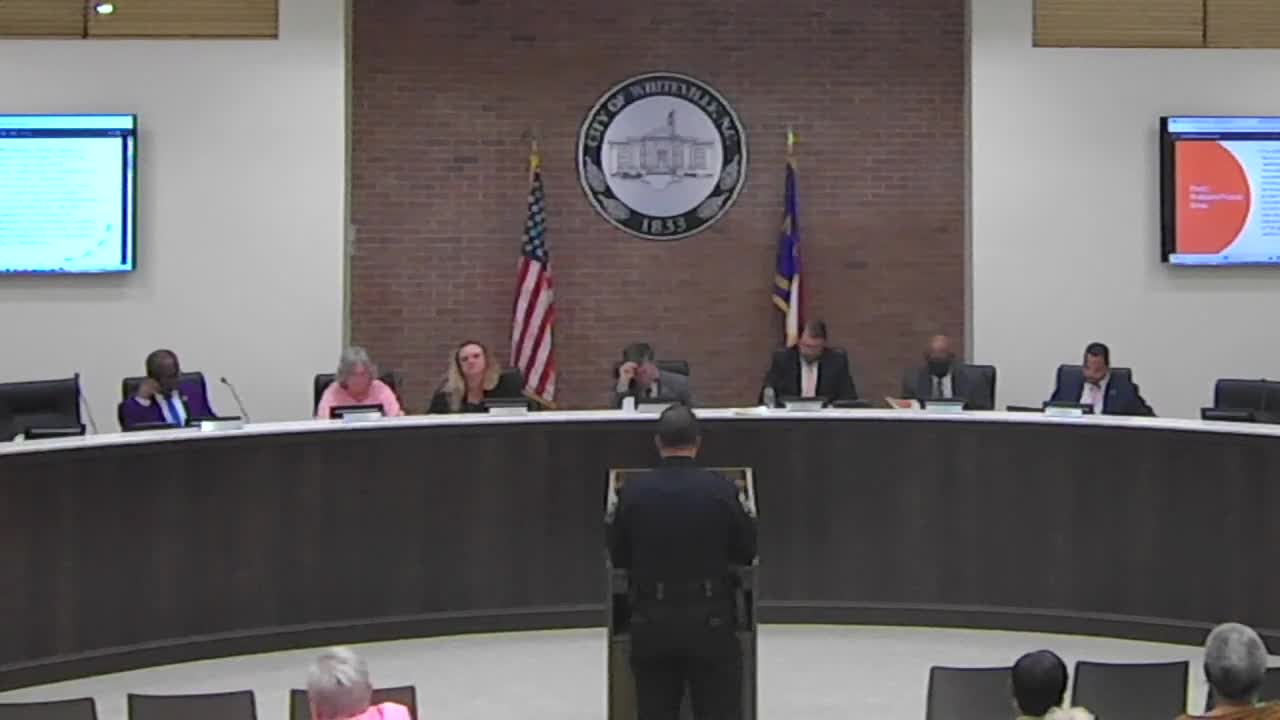
Police present federal grant plan to fund two narcotics/community officers; council questions long-term local cost
Summary
City police staff presented a federal grant proposal to fund two narcotics/community officers for three years with a ramped local match, and councilors pressed staff on long-term cost, vehicle procurement and tax impacts.
City police staff presented a federal grant proposal designed to fund two narcotics-focused officers over a three-year period and described how the department would use the funding and meet the local match. The proposal, as presented, would pair federal funds with a ramped local match and require the city to maintain the positions for an additional 12 months after the federal period.
The Police Chief (unnamed in the transcript) described overdose and drug-crime data and said the awarded funds "will be used to create 2 narcotic officer positions to work in and around specific neighborhoods for extended period of time," adding that the department would emphasize community-driven, non-enforcement engagement and data analysis. The chief said the grant term would be 36 months and would require a local match that increases over time.
Staff outlined the projected local-match schedule as presented: roughly $35,000 in year one, about $62,000 in year two and about $92,000 in year three; the total local ask across three years was presented as approximately $190,042, matched with about $250,000 in federal funds for a combined three-year total of about $440,042. Staff said year four would require the city to fully fund the officer positions if it chose to retain them beyond the grant.
Councilors questioned whether the city could absorb the rising local cost without increasing taxes, and staff discussed tradeoffs including temporarily leaving other positions unfilled, using older vehicles from administrative pools or buying lower-cost vehicles now and upfitting them later to save initial equipment expense. One council member framed the tax impact as roughly a 1.5¢ increase in year two, about 2¢ in year three and nearly 3¢ in year four under a particular scenario; staff said the city could return and adjust allocations if the grant were not awarded.
The discussion included budget modeling for vehicle procurement and staffing coverage, and staff said the department was already operating short on several officers and had been doing so for months. The transcript records the presentation and council discussion but does not contain a recorded vote to submit or accept the grant; staff said an application timeline would require decisions within a 45-day window once notified.
Because the transcript did not show a final approval or rejection, no formal action outcome is recorded here.