Get AI Briefings, Transcripts & Alerts on Local & National Government Meetings — Forever.
Residents press Whiteville leaders over recurring flooding as staff outlines multi-year projects
Loading...
Summary
Residents described repeated downtown and neighborhood flooding after a recent heavy rain and urged faster action. City staff said the storm equated to a roughly 25-year rain event, outlined past projects and grant funding, and warned that remaining solutions would require multimillion-dollar investments and time.
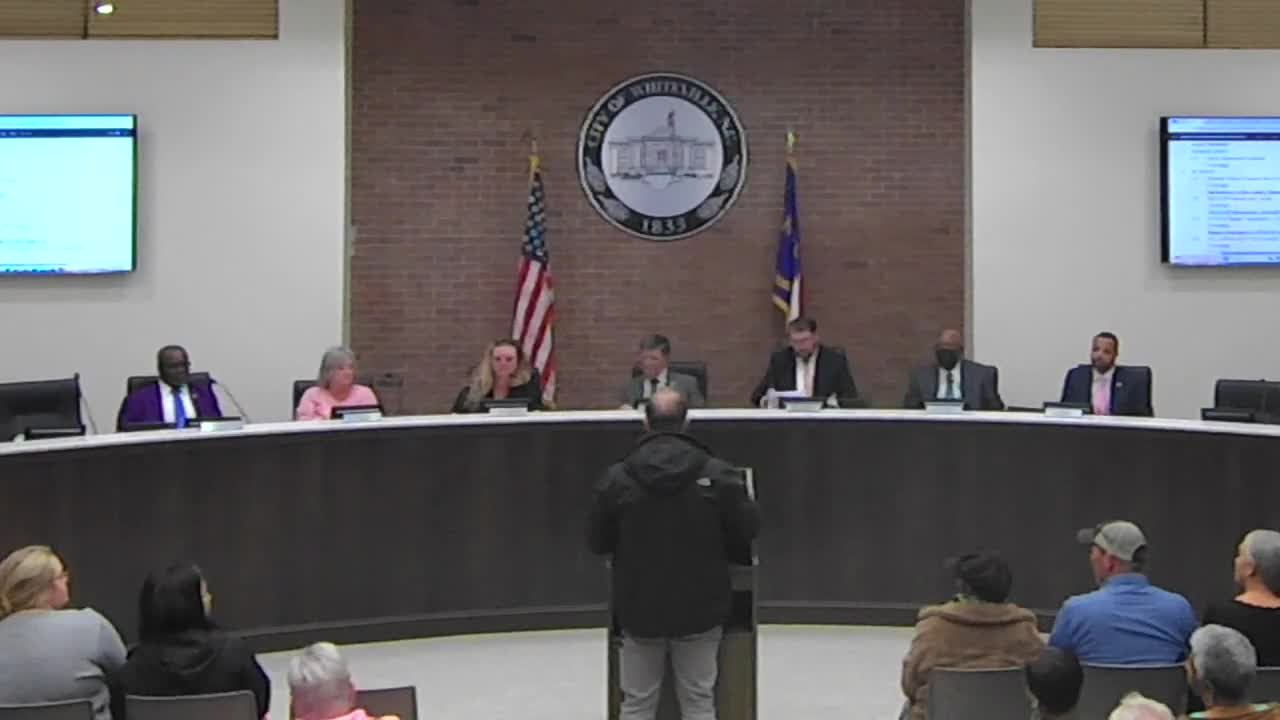
Whiteville residents told the City Council that repeated, sometimes severe, flooding of downtown and South White Oak is causing property damage, business disruption and growing frustration, while city staff described engineering studies and a series of staged projects intended to reduce future flood impacts.
Resident John Dean said volunteers compiled historical maps and GIS data showing three centuries of landscape change that the group says has narrowed and redirected natural drainage: "the rising floodwaters is 1 system symptom resulting from 3 centuries of combined historical decisions," Dean said, urging science-based, long-term solutions.
Several business owners and long-term residents recounted floods that followed comparatively modest rainfall, including water inside an 80-year-old downtown building. A retired U.S. Army engineer, Cecil Nance, commended the council's planning effort and encouraged residents to obtain flood insurance and to volunteer to help implement solutions. "This city council and the mayor is doing what they were hired and elected to do in order to remedy the plan," Nance said.
City staff said the October storm that produced the recent flooding was roughly a 25-year rainfall event and explained why the system backed up: most local stormwater infrastructure is designed to manage 10–25-year storms, and many pipes outfall to adjacent swamp areas that, when full, allow water to backflow into the system. "Most stormwater systems are designed to handle a 10 to 25 year storm," a city staff member said during the briefing.
Staff showed historical tax maps and aerial imagery that they said document progressive infill of former swamp and wetland areas and summarized completed projects and awards: earlier projects at Lee Street and Commerce & College Street (staff said those projects cost roughly $295,000 and $400,000, respectively), a $1.3 million Canal Street grant funded by Golden Leaf for an upcoming project, and an attempt to replace a lost $3.7 million federal program that was canceled during a prior administration. Staff also described a recommended detention/green-infrastructure approach — converting hardened surfaces to green space and adding stormwater features, similar to the retention elements included in a planned park.
Council members and residents repeatedly emphasized that the problem is multifaceted and costly. Staff estimated the remaining set of prioritized projects would total roughly $3 million when adjusted for inflation, and they warned that designing systems sized to resist extreme coastal surge and the largest rainfall events would be prohibitively expensive. The council urged residents to use official channels for detailed information and said staff would work to make engineering plans and project timelines more accessible.
Several residents and a nonprofit leader asked the city to improve communication about project timelines and technical details, noting that older residents and those without internet access may miss online updates. City staff said they planned to post engineering plans and project documents and encouraged residents to contact council and staff directly for specifics.
The meeting recorded extensive public comment and a staff briefing but did not include a recorded council vote adopting any new, immediate capital project; staff described projects in planning, engineering or grant-application stages and identified funding gaps that would need to be filled before construction could proceed.