
Riverton, Wind River Visitors Council debate who should approve joint powers budgets
Get AI-powered insights, summaries, and transcripts
Subscribe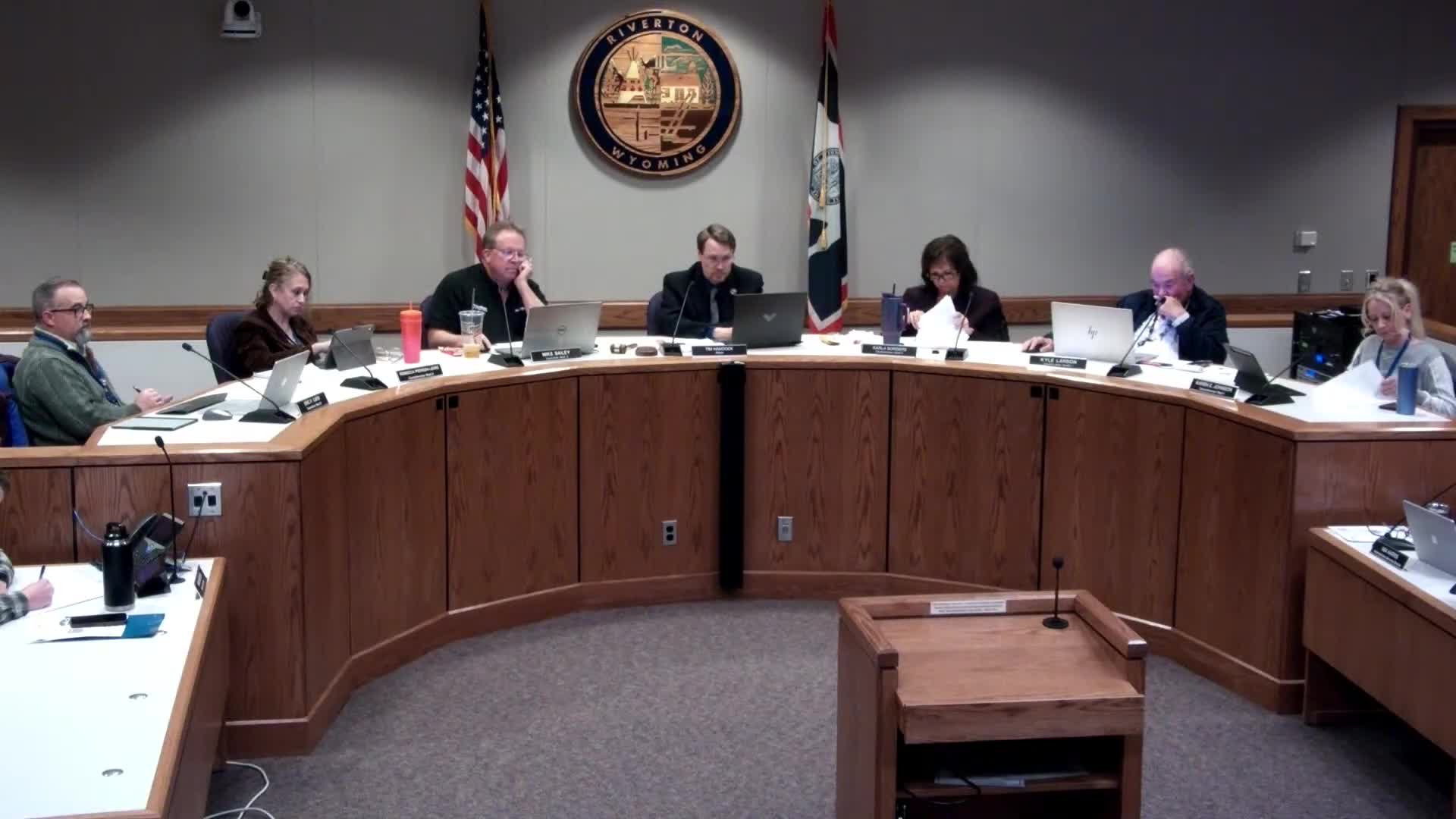
Summary
Riverton — City and Wind River Visitors Council leaders debated proposed changes on Nov. 4 that would align the visitors council’s budget process with state law and could shift routine budget adoption to the joint board.
Riverton — The Riverton City Council on Nov. 4 held an extensive discussion with Helen Wilson, executive director of the Wind River Visitors Council (WRVC), and other participants over proposed changes to the WRVC joint-powers agreement and its budget approval process.
The WRVC’s counsel proposed deleting language that currently requires each member governing body to separately approve the visitors council’s budget and instead have the joint powers board (the visitors council board) adopt the budget under the state’s Uniform Municipal Fiscal Procedures Act (quoted in the meeting as “39 15 2 11”). WRVC Executive Director Helen Wilson said the amendment was meant to align the joint-powers agreement with state statute and common practice for lodging-tax boards across Wyoming.
Council discussion focused on two core issues: whether the board should have primary authority to adopt the WRVC operating budget, and whether any change should preserve member jurisdictions’ control over destination-development allocations (TAD funds) that flow back to each municipality. Some councilmembers expressed concern about reducing elected officials’ direct control over use of lodging-tax-derived funds and about transparency for line items such as legal fees; others said if the board is trusted to manage operations it should also be trusted to adopt budgets, with member jurisdictions remaining involved through public hearings and liaison reporting.
Council members suggested compromise options — for example, letting the board adopt the budget while reserving unanimous approval for any change to TAD apportionments, or routing the WRVC budget review through FCAG (the county association) before the individual governing bodies vote. Mayor Tim Hancock said Riverton would start the conversation with other member jurisdictions at FCAG and report back.
Why it matters: The decision affects who has the final say over how lodging tax and TAD funds are allocated across towns and the county. The debate raised questions about audit transparency, the handling of unanticipated grants and legal fees, and the governance balance between appointed boards and elected officials.
Next steps: Riverton will discuss options at FCAG and with other member governments. No council vote was taken on the proposed amendment; WRVC representatives and Riverton officials agreed to pursue further conversations.