
Council approves diesel-fuel MOU with Community Entry Services for recycling truck
Get AI-powered insights, summaries, and transcripts
Subscribe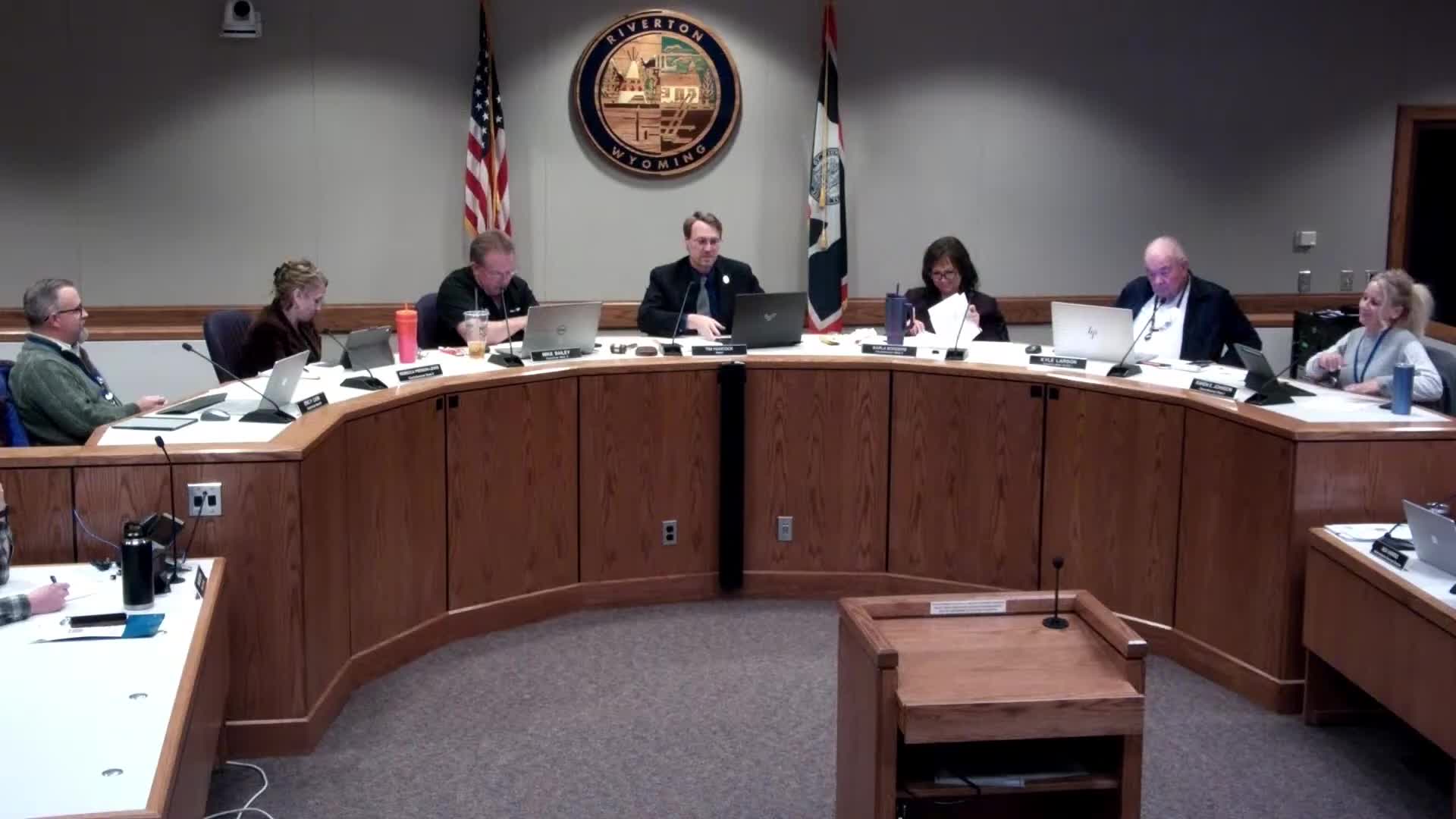
Summary
Riverton approved an MOU to formalize a long-standing arrangement allowing Community Entry Services to fuel its cardboard compactor truck at city pumps; council debate noted precedent and equity questions before final approval.
Riverton — The City Council voted Nov. 4 to formalize a long-standing arrangement allowing Community Entry Services (CES) to use city diesel at the municipal fuel pump to operate its cardboard-compactor truck.
Public Works staff said the truck, a donated 2003 Peterbilt, fills about 50 gallons roughly every two weeks and that annual fuel costs at recent rates would be about $4,283. The proposed MOU provides CES a fleet card for the city pump under a continuing, documented arrangement; the MOU memorializes a practice in place since about 2010.
Council discussion centered on equity and precedent: some councilmembers said the city receives a direct municipal benefit because CES’ work keeps recyclable cardboard out of the landfill and provides employment to disabled local residents; others asked whether charging a modest fee for use of airport or city fuel would be appropriate to generate revenue for airport operations and to avoid setting a broad precedent for free municipal resources.
After discussion, the council approved the MOU. Supporters emphasized the nonprofit’s role in job creation and landfill-avoidance; opponents urged citywide policy review to define when the city should charge for use of municipal facilities and resources.
Why it matters: The MOU formalizes public-private cooperation that reduces landfill costs and supports nonprofit employment programs. At the same time, the debate highlighted a recurring municipal policy issue — when to provide in-kind support and when to monetize city resources to offset operating costs.
Next steps: Staff will issue a city fuel card and monitor usage; council directed staff to consider, separately, whether broader airport and facility fee schedules need updating.