UN urges protection of civilians in Gaza, outlines humanitarian scale-up as debate continues over international force and treatment of special rapporteurs
Loading...
Summary
The UN condemned recent civilian deaths in Gaza and described an ongoing humanitarian scale-up during the ceasefire, while diplomats and member states continue discussions about the makeup and authority of any international force.
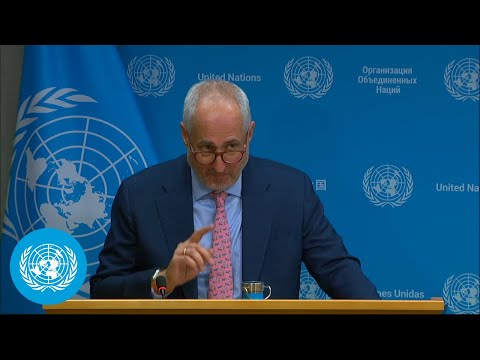
The United Nations spokesman strongly condemned "the killings due to Israeli air strikes of civilians in Gaza yesterday, including many children," and urged all parties to uphold the ceasefire and avoid actions that "risk[] harms civilians, [and] humanitarian operations."
He credited "the ongoing diplomatic efforts of Egypt, of Qatar, of Turkey, and of The United States" for sustaining the agreement and said the UN and partners are "rapidly scaling up our presence across Gaza, working intensively to deliver life saving assistance to communities in need." The spokesperson outlined recent humanitarian outputs: child protection partners reached about 1,500 children and 700 caregivers; food partners are supporting the production of daily bread bundles; and the UN Office for Project Services delivered more than 200,000 liters of fuel to partners in northern and southern Gaza to keep water, sanitation, health and other services running.
On constraints, the spokesperson said the UN needs the ceasefire to hold and asked for "more functional crossing[s], the lifting of bureaucratic hurdles, safe and viable routes inside Gaza, and unimpeded access including for NGOs and, of course, continued funding." He warned that people still struggle to access meat, vegetables and fruit and that many families rely primarily on cereal, pulses and small amounts of dairy.
Separately, reporters asked about proposals for an international force in Gaza and whether a UN-backed force would require Chapter VII authority. The spokesperson said "discussions on the makeup of such a force are ongoing" and that any resolution backing a force "will be a decision taken by member states." He added that a force with UN backing would have more credibility but declined to speculate on causal links between the presence or delay of such a force and recent attacks, leaving that analysis to outside analysts.
Reporters also raised the treatment of UN special rapporteur Francesca Albanese after an Israeli representative used insulting language toward her in an official meeting. The spokesperson called that language "shocking, to say the least," reiterated that special rapporteurs are independent and "an important part of the international human rights mechanism," and said they "need to be respected" when performing their work. He further noted that visa denials affecting some UN officials have been raised with the host country.
The spokesperson emphasized the UN's commitment to scaling up humanitarian assistance while noting that full delivery of the UN's 60-day humanitarian plan requires the ceasefire to hold, more crossings and continued funding.