Get Full Government Meeting Transcripts, Videos, & Alerts Forever!
Get email alerts on the Land Use topic
No spam. Unsubscribe anytime.
Marathon County pauses tax-foreclosure on three contaminated parcels to coordinate with DNR and village
Summary
The Finance & Property Committee voted unanimously to remove three Milwaukee-area parcels from the county's in-rem (tax-foreclosure) petition pending further investigation, after staff detailed prior DNR actions and recognized environmental contamination at a former sawmill site.
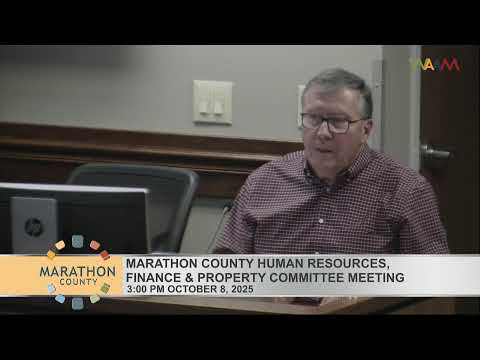
The Marathon County Finance & Property Committee voted unanimously on Oct. 7 to pause county acquisition of three parcels tied to a former Weisenberger timber treatment site and remove them from the county's in-rem (tax-foreclosure) process while staff coordinates with the Wisconsin Department of Natural Resources and the Village of Marathon City.
The action followed a staff briefing describing a multi-year history of environmental work at the site, including prior DNR monitoring and an assessment by GEI that identified recognized environmental conditions. Administrator Leonard told the committee that the county began title research on an original Grama batch of 97 parcels and filed an in-rem petition on 89 parcels; roughly 47 parcels now have adjourned hearings set for Nov. 18 for possible judgment and county acquisition if owners do not redeem.
"These are parcels that have had previous DNR involvement relative to contamination either actively being monitored or had closed sites," Administrator Leonard said. He recommended delaying acquisition of the three Weisenberger parcels so the county could meet with the DNR, explore potential assessment or cleanup grants and clarify liability exposure with existing site users.
Chair Robinson explained that the former Weisenberger Tie & Lumber property was used for wood preservation and treatment with pentachlorophenol and later copper-chromium-arsenic preservatives, both of which can leave persistent soil contamination. He said the taxes stopped being paid after the property owner's death in 2012 and that some portions of the site were being used by local businesses. "The county enjoys liability protection if we acquire it through tax delinquency, but once it's put into use some of those liabilities are impacted," Chair Robinson said.
Staff identified possible grant avenues, including Wisconsin assessment funding and the DNR's Ready for Reuse program, which could help pay for investigation or cleanup with a local share requirement. Administrator Leonard said the DNR indicated there might be assessment dollars available but cautioned that funding availability was not certain.
County staff reported that ongoing tax bills across the three parcels total just north of $2,400 per year, and that some neighboring property owners had expressed interest in purchasing parcels if they were cleaned up. Committee members also said previous efforts to secure inspection warrants and DNR access had been hampered by gate closures and grant timing.
Chair Gibbs moved to remove parcel numbers listed in the meeting packet from the interim in-rem petition and pause county acquisition pending further investigation and coordination; Supervisor Lemmer seconded. The motion carried unanimously.
Next steps identified by the committee include meeting with the DNR to confirm assessment and cleanup grant options, checking the Village of Marathon City's interest in partnering, clarifying arrangements with current site users and determining whether to dismiss the three parcels from the ongoing petition or delay county action until after additional investigation.
If the Nov. 18 hearings proceed and owners do not redeem, the committee noted the county would still have the option to pursue judgment and acquisition on parcels that remain in the in-rem process.