Get Full Government Meeting Transcripts, Videos, & Alerts Forever!
Get email alerts on the Critical Areas topic
No spam. Unsubscribe anytime.
Monroe Planning Commission reviews sweeping critical-areas code update; staff to return with citations
Summary
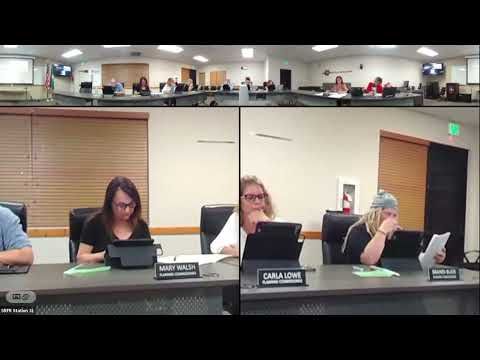
The Monroe Planning Commission on Sept. 22 received a workshop on proposed updates to the city—s critical-areas code intended to align local rules with state guidance and newer scientific mapping.
The Monroe Planning Commission on Sept. 22 received a workshop on proposed updates to the city—s critical-areas code intended to align local rules with state guidance and newer scientific mapping.
City planner Kate, who led the presentation, said she is auditing the existing code and will return with revised language and citations. "I'm still hopeful to get through it by the end of the year," Kate said, and pledged to include specific sources when the draft returns.
The updates staff presented focus first on definitions and references to "best available science" as defined at the state level, then on more technical sections including maps, inventories, aquifer protections, water/stream typing, wetlands standards, invasive-species controls and mitigation sequencing. Kate said most definitions are drawn from the Washington Administrative Code and the Revised Code of Washington, supplemented with language from other jurisdictions that have successfully secured state approvals.
One concrete change flagged by staff: Department of Health mapping shows two wellhead protection areas within the city limits that were not reflected in the earlier analysis. "We actually have 2 wellhead protection areas. Mister Bacon has 1 off of Chain Lake Road, and then there's a secondary, kind of south of the Department of Corrections," Kate said, adding the city will need to adopt regulations not currently in code.
The commission discussed a transition in stream "typing" nomenclature from older numeric categories to the Washington Department of Fish and Wildlife shorthand (S, F, Np, Ns), and staff said stream regulations tied to the Shoreline Master Program will be cross-referenced. Kate also noted the city—s critical-area maps have not been substantially updated since 2005 and that state mapping products (WDFW, Ecology, Department of Health) will be used to supplement the local map.
Commissioners pressed on private-property impacts and the limits of regulatory authority. Members asked whether the draft language would leave property owners with no reasonable economic use; Kate said the code includes a separate reasonable-use variance process that goes to the hearing examiner. "We actually have a specific section within the code, which I don't think is in tonight's packet, but it is the reasonable use variance," she said, describing an example in which an entire parcel is impacted and the hearing examiner must decide the smallest viable envelope.
Questions also addressed practical enforcement and long-term maintenance. Commissioners and staff discussed homeowners associations (HOAs) that are expected to maintain common-area critical-area tracts: Kate said the city—s regulatory option is to enforce code requirements but that the city has limited authority to compel HOAs to set dues or manage finances; if an HOA fails, enforcement may fall to individual property owners.
Invasive-species control, particularly knotweed and blackberries, drew repeated attention. Commissioners asked whether the draft should permit limited chemical treatments; Kate said some other jurisdictions include constrained chemical-control language and that she will research defensible, reviewable approaches and may reference county standards.
Wetland development standards, Kate said, will continue to follow the Department of Ecology's Western Washington rating system (2014) and are not being changed in this draft. She also advised applicants that critical-areas reports prepared by qualified specialists are required and that the city uses third-party scientific review during permitting.
Kate closed by outlining next steps: reorganize exemptions to make clear which provisions apply to specific critical-area types; include aquifer recharge regulations in the next packet; and provide citations and a filled-out audit checklist for state reviewers in the environmental review package.
Commissioners did not take formal action on the code at the workshop but directed staff to return with the cited materials and revised text. Kate said she will bring the next set of edits at an upcoming meeting and complete two priority items for the next draft: aquifer recharge regulations and a reorganized exemption section.
The commission will continue the review at future meetings.