Get Full Government Meeting Transcripts, Videos, & Alerts Forever!
Get email alerts on the Shannon Program And State Grants topic
No spam. Unsubscribe anytime.
Shannon program highlighted as a national model as state grants fund local partnerships
Summary
State grant administrators and the Shannon research partner described the Shannon Community Safety Initiative as an evidence-based, 20-year program that supports multidisciplinary local teams in 25 communities and uses local research partnerships to guide strategy and evaluation.
The Office of Grants and Research and Shannon's statewide research partner told the commission that Shannon has become a national model for community-based violence prevention.
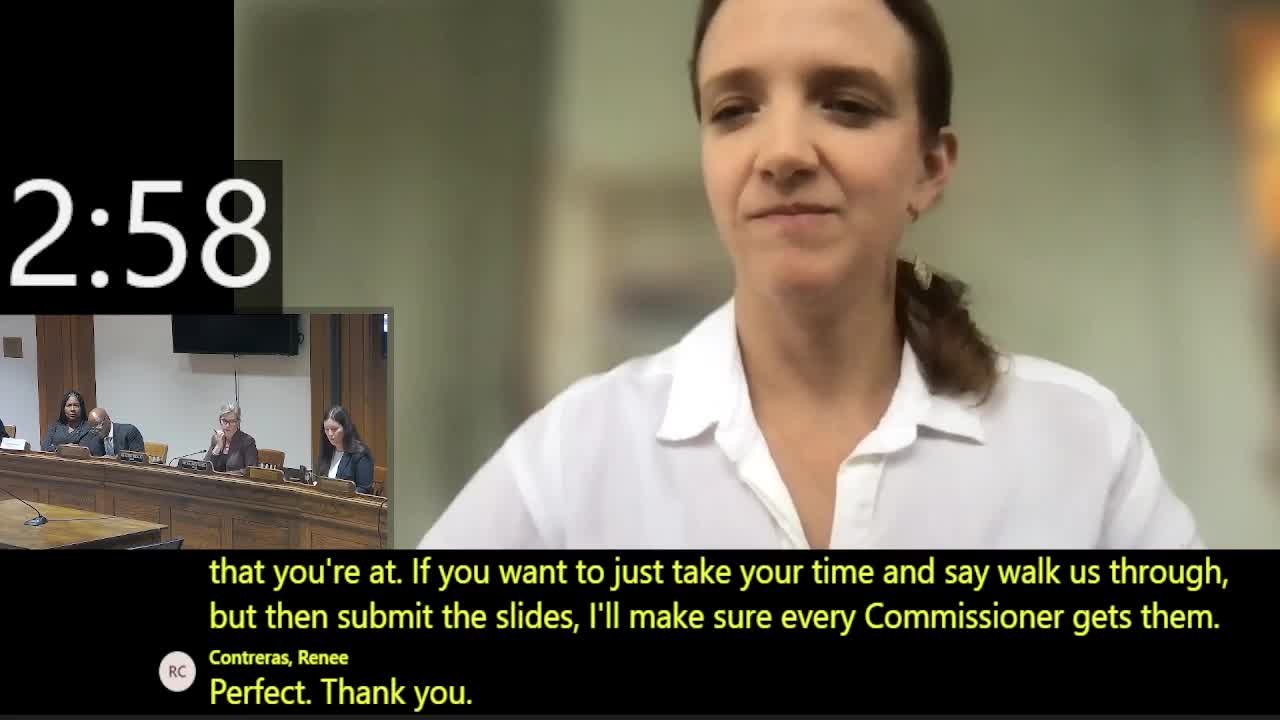
"If there's one thing that I would like you to walk away from our presentation with, it's that Shannon has become a national model for community based violence prevention," said Renee Contreras, the program's statewide research partner, summarizing 20 years of sustained state investment, local research partnerships and cross-sector collaboration.
Kevin Stanton, executive director of the Office of Grants and Research, told the commission that OGR manages hundreds of millions in state and federal funds and emphasized how grant programs are designed to strengthen partnerships between law enforcement and community-based organizations. He also cited measurable enforcement results from the Commonwealth's PSN (Project Safe Neighborhoods) activity: seizures of illegal firearms and narcotics and suspected drug proceeds tied to grant-funded work.
Shannon combines two pillars: multidisciplinary collaborations in 25 communities and local research partnerships that guide strategy and evaluation. Contreras said that selection for Shannon funding is based on biannual tracking of gang activity and violence, and that the program pairs service delivery with research so that local strategies are data-driven.
Shannon-funded communities include a range of municipal contexts and program types—hospital-based violence intervention, neighborhood trauma response teams and community outreach—intended to create coordinated responses across systems. Testimony emphasized that the Shannon model's long-term, research-informed approach enabled stronger local strategies than short-term pilot grants.
Why it matters: The commission is tasked with assessing how violence-prevention dollars are spent. Shannon’s combination of sustained funding, embedded research and cross-sector partnerships was presented as a replicable model for evidence-based statewide investment.
Next steps: Shannon and OGR provided slides and offered to deliver more detailed local evaluations and data to the commission for follow-up. The commission signaled interest in reviewing local dashboards and disaggregated outcome metrics to assess geographic equity and program impact.