Get Full Government Meeting Transcripts, Videos, & Alerts Forever!
Get email alerts on the Funding And Grassroots Capacity topic
No spam. Unsubscribe anytime.
Mass. violence-prevention groups urge sustained, flexible funding as federal cuts bite
Summary
Community-based violence-prevention programs told the Legislature's commission that long-term, flexible funding is essential and that recent federal grant cuts have forced layoffs and reduced services. Witnesses recommended multi-year grants, full-cost reimbursement and a public dashboard tracking survivor outcomes and service gaps.
Massachusetts violence-prevention providers urged the state Commission on Violence Prevention Services Funding on Nov. 6 to expand long-term, flexible funding and to step in where federal funding has shrunk.
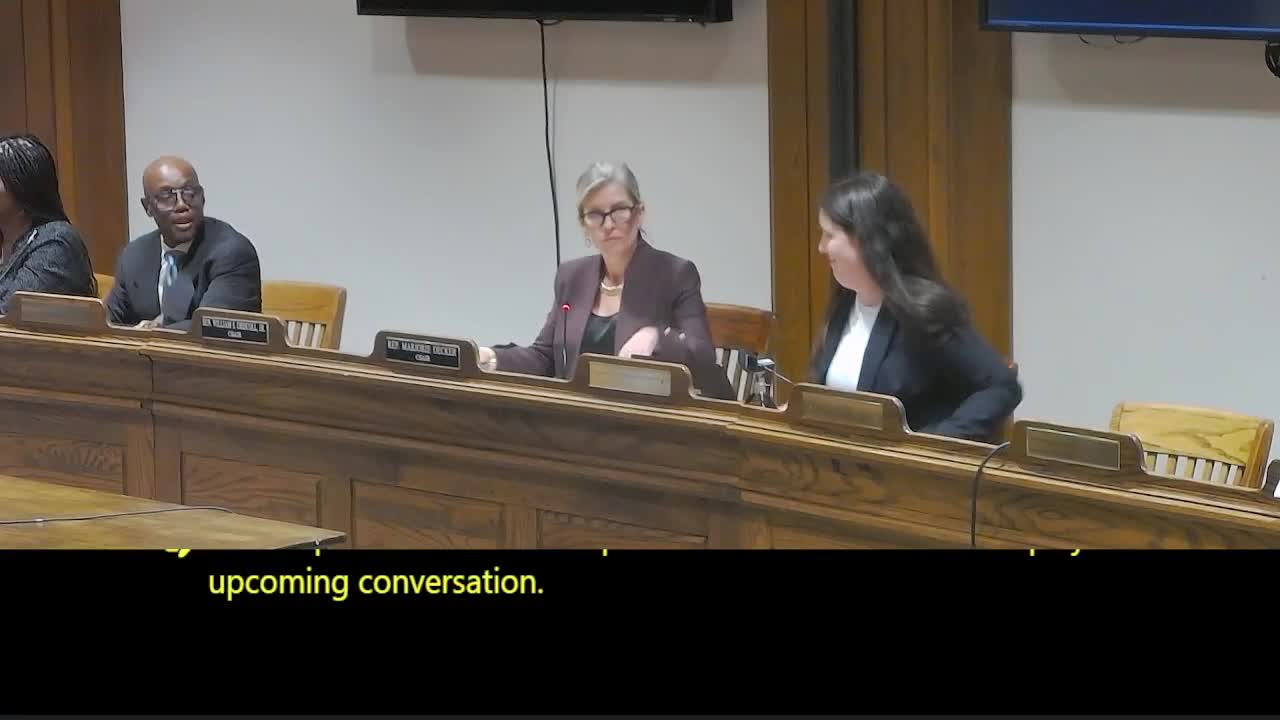
"Our job is to examine how that money's being used, and the efficacy. Who's getting that money? Are we doing, are we spending the money in the right places? Are we spending enough money?" said co-chair Marjorie Decker as she opened the hearing.
The hearing gathered testimony from dozens of community organizations that run street outreach, reentry supports, bereavement and trauma-informed services. Testifiers said stable, multi-year funding and the ability to use dollars for basic needs, food and flexible supports are often the difference between a program that can scale and one that barely survives.
"Lived experience, no 1 needs to teach us what we need," said Emilio "Noble" Williams, executive director of the Transformational Prison Project, describing in-prison and community work with young people and parents. He said the organization operates on a $1.6 million annual budget with 11 staff and that cuts have constrained travel, outreach and expansion; he said an "ideal" budget would be about $5.5 million to meet demand.
Ruth Rollins, founder of We Are Better Together, urged three priorities: "Invest in grama organizations with long term flexible funding," "fund a public health approach to gun violence," and build "a transparent community-informed database" that includes survivor outcomes and service gaps. Rollins said her group was operating on under $1 million after cuts and estimated a $2.5 million level would better meet community needs.
Multiple witnesses described how grant restrictions limit what programs can buy. Teresa D'Gregorio and Antonio Gutierrez, who lead a Lynn street-outreach program serving 12–24-year-olds, said their current budget is close to $500,000 and that a $1 million annual budget would allow them to place more outreach workers, fund therapists and provide basic items such as laundry cards and hygiene supplies.
Several organizations reported stable, positive outcomes tied to state-supported programs. Naomi Parker of More Than Words said program participants earn high-school diplomas and enter postsecondary education or employment: "We have 97% of our youth earning a high-school diploma, 60% engaging in post-secondary education, and 80% working," she said, and credited reliable year-to-year funding with the ability to plan long-term.
But several providers also warned that federal grant decisions are putting services at risk. Karl Miranda of Roca said the U.S. Department of Justice abruptly terminated three federal grants, "cutting $4,000,000 from our budget without any notice," and forced the nonprofit to reduce staff in Massachusetts by roughly 40 positions. Solomon Bayman, Roca's Western Massachusetts director, said the cuts came as costs rise while some state line items have been flat.
Panelists and advocates recommended several specific changes for the commission to consider: expand multi-year grants; permit flexible "full cost" reimbursement of nonprofit contracts (a statutory bill, s.2203 / H3428, was cited during testimony); prioritize geographic equity so smaller cities get the same program types as Boston; and invest in trauma-informed, survivor-centered care that includes bereavement and reentry supports.
The Louis D. Brown Peace Institute described a statewide reach built over three decades and urged investment to sustain both immediate homicide-response work and primary-prevention programs. "Survivors experience emotional, physical, and financial stress," said Alexandra Durellis, and the group reported a $4.5 million operating budget and an $8 million target to expand prevention work and staff support.
Commissioners said they would follow up with providers for more specific budget, caseload and program data. The hearing record shows frequent requests to submit written material and clarifying follow-up; several presenters agreed to provide detailed budget breakdowns and outcomes metrics after the session.
Why it matters: Witnesses framed gun violence as a public-health problem that requires long-term investments in people and relationships rather than short, prescriptive grants. Several panelists said short-term or narrowly restricted funding undermines continuity of care, limits hiring and prevents organizations from providing the day-to-day supports that keep young people safe.
Next steps: The commission will collect the written follow-ups and may recommend statutory or budgetary changes, including consideration of full-cost nonprofit reimbursement and multi-year grants. Commissioners also signaled interest in a public dashboard to surface survivor outcomes and service gaps enabling more equitable resource allocation.