Get Full Government Meeting Transcripts, Videos, & Alerts Forever!
Get email alerts on the Economic Development topic
No spam. Unsubscribe anytime.
Council authorizes study of downtown "entertainment district" after 7–1 vote
Summary
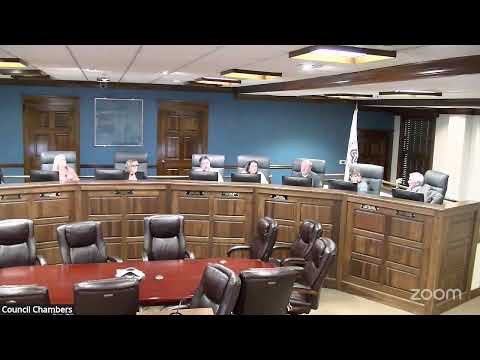
Jeffersontown City Council voted 7–1 to direct the mayor's office to conduct a detailed study into establishing an entertainment district in downtown Jefferson Town. Councilors discussed hours, potential costs for policing and cleanup, and whether peer cities realized direct tax revenue from similar districts.
Jeffersontown City Council voted 7–1 to authorize the mayor's office to conduct detailed studies on a potential downtown entertainment district that would allow coordinated special‑event rules for participating businesses.
The Economic Development Committee presented the recommendation and asked the council to authorize the next phase of work: drafting potential ordinance language, identifying hours and restrictions, and returning with budget estimates for implementation. Committee members suggested possible hours for participating venues (committee discussion mentioned roughly 10 a.m. to 11 p.m., seven days a week as an example) but said no ordinance or rezoning would be required to begin the study.
"What's being asked is to have this council make a decision if they want to advance the next leg of this potential project ... come back with the budget, ... what would be the cost to create an entertainment destination center?" a committee member said. Council member Vince Grissanti pressed whether other cities receive a direct financial benefit such as sales or tourism tax; staff and others on the committee said many peer cities reported increased foot traffic and development but that sales tax flows to Metro Louisville rather than the city, and that local benefits would likely be limited to permit fees and indirect business growth.
Councilors also raised concerns about possible added demands on police and public works. "Could it create an increase? ... there's gotta be patrolling and there's gotta be public works coming through in the morning and cleaning up," one council member said. Committee members said peer cities generally reported minimal additional net cost, but the council approved a study so those impacts could be quantified.
The motion to proceed with the study was moved, seconded and called for a roll call. The clerk recorded a 7–1 vote in favor; Council member Vince Grissanti cast the sole No vote. The motion passed, and staff will return with draft ordinance language, budget estimates and a proposal for rules and hours if the mayor's office proceeds.