Get Full Government Meeting Transcripts, Videos, & Alerts Forever!
Get email alerts on the Self Esteem topic
No spam. Unsubscribe anytime.
Public Defender's Office and Snowline Joint Unified offer parents practical steps to build children's self‑esteem
Summary
Mike Baritz, a teacher on special assignment for Snowline Joint Unified School District, opened an evening workshop thanking parents for attending a session the district requested on self‑esteem.
Mike Baritz, a teacher on special assignment for Snowline Joint Unified School District, opened an evening workshop thanking parents for attending a session the district requested on self‑esteem.
Brianna Forrest Stevens, supervising social service practitioner for the public defender's office, led the presentation, saying, "Self esteem is how we feel about ourselves and how we perceive our own work." Stevens framed the topic within Maslow's hierarchy of needs and stressed that unmet esteem needs can limit children's ability to take healthy risks and to rebound from setbacks.
The session outlined risks and causes of low self‑esteem, including bullying, trauma, negative cultural messages and breakdowns in parent‑child communication. Stevens said low self‑esteem can raise the risk of anxiety, depression, isolation and behaviors that put young people at greater risk of entering the juvenile justice system. "We see oftentimes at the public defender's office kids who don't have spaces to go to ... they don't have boundaries," she said.
Presenters gave parents concrete strategies they said help build healthy self‑esteem: consistently show unconditional love, praise effort rather than outcomes, encourage age‑appropriate independence, model positive self‑talk and set protective boundaries at home. Stevens recommended that parents "praise efforts, not just results," explaining that focusing on persistence and problem solving supports internal motivation.
For young children, presenters recommended play‑based communication and, when appropriate, play therapy. Stevens noted that cognitive behavioral therapy and mindfulness‑based approaches can also be effective and that schools and county providers can refer families for higher levels of care.
Stevens described local programs intended to prevent court involvement: a LEHI and truancy partnership with Snowline Joint Unified, recreational scholarships to help youth join extracurricular activities, and coordination with probation and community partners. She said the public defender's office offers recreational funds "to fund some of those kids to join those activities" when families lack means.
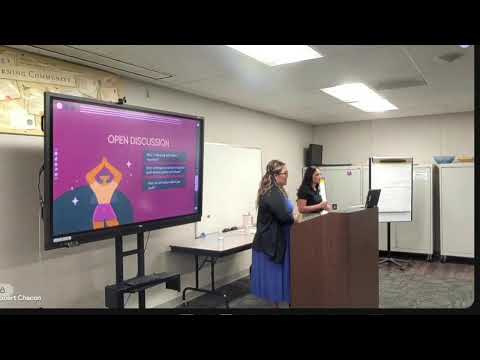
During an extended Q&A, parents described common early‑grade issues: a first‑grade child who felt excluded after making new friends, and a third‑grade child who takes others' snacks and then directs anger at a sibling. Panelists advised first steps of open communication with the child and the teacher, age‑appropriate coaching about boundaries, and, when conduct crosses to physical harm or sustained harassment, school involvement.
Stevens and parents discussed the particular challenge of children who "mask" distress by appearing responsible; presenters said such children can bottle up emotions and benefit from therapy, which also gives parents tools to practice at home. A parent mentioned enrolling a child in BrightLine for therapy; Stevens supported professional help when home strategies fall short.
Organizers distributed county crisis‑line contacts, information on Victor Valley Behavioral community support services for family and individual counseling, and tip sheets summarizing the talk for refrigerator posting. Stevens closed by inviting families to the public defender's trunk‑or‑treat event in San Bernardino and noting a follow‑up session scheduled for October.
No formal decisions or policy actions were taken at the meeting; the session was educational and focused on family‑level strategies and available community supports.