Kenosha transit budget review finds $1.7 million larger general-fund gap; commissioners recommend budget to finance committee
Loading...
Summary
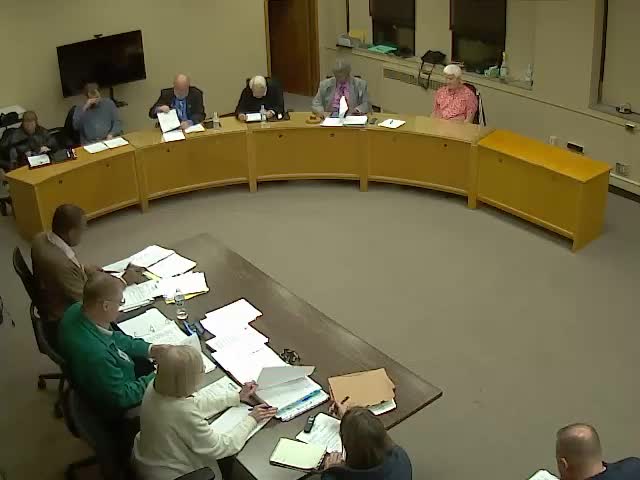
Kenosha — At a Nov. 3 special meeting, the Kenosha Board of Transit Commissioners reviewed the proposed 2026 transit operating budget and five-year capital improvement plan and voted to recommend both to the city finance committee.
Kenosha — At a Nov. 3 special meeting, the Kenosha Board of Transit Commissioners reviewed the proposed 2026 transit operating budget and five-year capital improvement plan and voted to recommend both to the city finance committee.
The board was presented with a 2026 operating budget that staff said balances without cutting transit service or eliminating any full- or part‑time positions, but that relies on increased transfers from the city’s general fund and working capital. Staff said the general-fund contribution to cover the operating shortfall rises from $1,363,382 in the prior year to $2,539,311 for 2026, plus roughly $500,000 drawn from working capital, figures presented by the city administrator during the meeting.
Why it matters: commissioners and staff said the gap stems largely from the end of one-time federal operating grants used during the pandemic period (identified in the discussion as CARES-related assistance). Staff emphasized that capital grants for buses and equipment remain available for purchases, but that operating support previously covered by grants has diminished.
Key figures presented at the meeting included a personnel-services proposal of $6,000,592, contractual services shown at roughly $2,193,000 (an increase that staff tied to higher purchase/transportation contract costs and a contract amendment), materials and supplies at about $1,849,000, and total proposed 2026 expenses of $10,891,549 as shown on the revenue/expense pages presented to commissioners.
On revenues, the transit director said, “that’s really nothing significant in the revenue side,” noting only modest variances largely tied to fuel and payroll. The director and commissioners also discussed advertising revenue; staff said little advertising income materialized in 2025 and they did not budget advertising revenue for 2026.
Contractual obligations: staff reminded the board the agency must operate paratransit if it runs fixed-route service. The director explained that a recent RFP handled with county partners produced five responses and that pricing is under review; the board heard that some proposals could be higher than the current contract.
Capital plan: the board reviewed the five-year CIP, which breaks out funding sources for bus replacement and other projects. Staff described how federal funds and borrowing would be used for vehicle purchases, and said several larger projects are included as placeholders with only modest design funds budgeted in 2026 (for example, a $100,000 placeholder for transfer-center design/engineering and a $75,000 placeholder for trolley replacement design). Staff cautioned that full project funding would require further study and committee review.
Board action: a motion to recommend the 2026 operating budget and CIP to the finance committee was made and seconded; commissioners voted by voice (ayes) and the motion carried.
What’s next: staff and commissioners said the city will need to pursue longer-term options to reduce dependence on general-fund transfers, including exploring new revenue sources, contract negotiations, and potential service or efficiency changes. No specific service reductions were adopted at the meeting; the board instead referred the budget and CIP for finance-committee consideration.