Get Full Government Meeting Transcripts, Videos, & Alerts Forever!
Get email alerts on the Local History Dale Burke topic
No spam. Unsubscribe anytime.
Local historian traces early 20th-century life in Weston County and tells story of Dale "Del" Burke's Yellow Hotel
Summary
A local presenter gave an illustrated talk covering Wyoming railroad towns, Prohibition-era moonshining, New Deal work programs, the 1949 blizzard and a biographical account of Mary Ada "Dale/Del" Burke, the proprietor of Lusk’s long-running Yellow Hotel, including its estate sale and later destruction by fire.
Glenn delivered a wide-ranging illustrated talk at the Upton Senior Center on regional history from the 1910s through the 1940s and a second segment on the life of Mary Ada "Dale" (also presented as Del) Burke and her Yellow Hotel in Lusk.
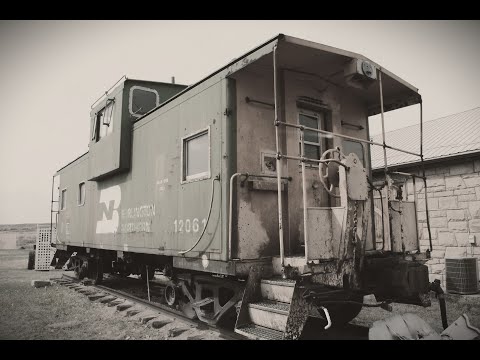
Glenn opened by describing the centrality of railroads to Wyoming’s early settlement, noting that towns often formed roughly every 30 miles along lines and that several once-thriving places had become ghost towns. He used Ardmore, Dewey and Cambria as local examples: Ardmore and Dewey as shipping points and Cambria as a coal company town now reduced largely to a cemetery.
He then described social life in boom towns — banks, blacksmiths, general stores and hotels alongside saloons, gambling and brothels — and recounted local anecdotes, including references to Calamity Jane and a Newcastle brothel built around 1903. On early automobiles, Glenn said the Model T was produced roughly 1908–1927 and cited a 1925 price around $260; the later Model A (1928–1931) he said cost about $440 in 1930. He also noted the Ford Trimotor airliners built in the late 1920s and early 1930s and their limited survival into the present day.
Turning to Prohibition-era activity, Glenn recounted a series of moonshining anecdotes from the region and at one point said, "I have a jar of moonshine here on the table if anybody gets thirsty." He connected these stories to local bootlegging and delivery routes and reported oral histories of arrests and stills being seized.
On the Great Depression, Glenn summarized bank failures, the 1929 stock-market crash and agricultural distress. He described the arrival of New Deal programs, saying the Civilian Conservation Corps (CCC) operated in the 1930s and built state parks and lookouts, and that the Works Progress Administration (WPA) provided employment on roads, bridges and public buildings; he cited local CCC/WPA projects and said the CCC ran through the late 1930s into the early 1940s.
Glenn also described the 1949 blizzard that paralyzed routes across Nebraska, the Dakotas and Wyoming, killed dozens, and left drifts up to 20–30 feet in places; he described aircraft delivering hay to stranded livestock during that emergency.
In the lecture’s second half, Glenn presented a detailed biography of Mary Ada (born 07/05/1888) who later used the name Marie and then "Dale/Del" Burke. He described her early life in Ohio and North Dakota, travel to Banff and Juneau where she worked in the red-light districts, and later moves through Montana and Casper before settling in Lusk. Glenn said Dale purchased and painted a 10-room hotel bright yellow and moved it across from Lusk’s railroad depot; it became known as the Yellow Hotel and operated for many decades.
Glenn described the Yellow Hotel’s offerings — food, moonshine, bands, gambling and upstairs rooms — and its clientele, which he said included ranchers, oilfield workers, truck drivers, soldiers and hunters. He said Burke donated to local causes (including helping students through college and contributing to local monuments) and recounted disputes in town over whether to close the business; Glenn quoted local accounts in which town services (water, electricity) were threatened as leverage in those disputes.
Glenn recounted Burke’s later life: a hip fracture on 08/04/1979, subsequent move to a nursing home and her death on 11/04/1980 at age 93. He described an estate auction in 1981 that drew thousands of buyers, listing sale prices mentioned in his talk (for example, the purchaser of the Yellow Hotel for $41,500 and a 418-acre ranch for $173,000; Glenn attributed other auction prices to published auction records and local reporting). He closed by noting that the Yellow Hotel later burned in a controlled burn by the Lehi Fire Department and pointed attendees to books about Dale Burke available at the Weston County Library.
Glenn’s presentation relied heavily on photographs and oral histories; many of the anecdotes he recounted were identified as local recollections. He invited questions at the end of the program and provided attendees with references for further reading.