Get Full Government Meeting Transcripts, Videos, & Alerts Forever!
Get email alerts on the Legal Litigation topic
No spam. Unsubscribe anytime.
Cherokee Nation attorney general updates council on litigation and warns of state push to file hunting citations in state court
Summary
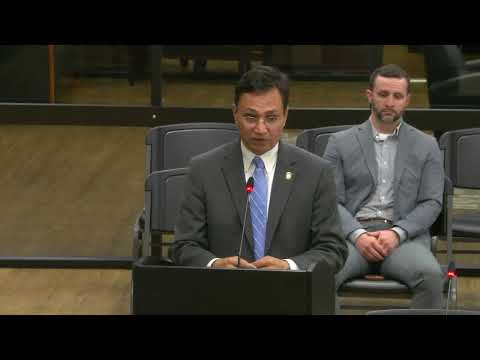
Attorney General Chad Harshaw told the Cherokee Nation Tribal Council that motions in the Ballard and Hiskey litigation remain under court consideration and that the Nation will file a brief in the Strobel income-tax matter with the U.S. Supreme Court, and he warned that the Oklahoma Department of Wildlife Conservation has indicated it may try to prosecute hunting and fishing citations in state court rather than in tribal court.
Attorney General Chad Harshaw told the Cherokee Nation Tribal Council that motions in the Ballard and Hiskey litigation remain under court consideration despite slowdowns tied to a government shutdown, and that the Nation plans to file a brief with the U.S. Supreme Court in the Strobel income-tax matter.
Harshaw briefed the council on three items: the Ballard and Hiskey case in the Northern and Eastern Districts, the Oklahoma Supreme Court's Strobel decision and subsequent petition for U.S. Supreme Court review, and recent statements by the Oklahoma Department of Wildlife Conservation about tribal hunting and fishing licenses. "We asked the court to go ahead, in the meantime, consider the fully briefed motions to dismiss," Harshaw said. He added that the court agreed to do so even though some activity nationwide has been slowed by the federal shutdown.
Harshaw described the Strobel matter as a recent Oklahoma Supreme Court decision about income taxation in Indian country that has been appealed to the U.S. Supreme Court. "We expect and intend to file a brief tomorrow by the deadline," he said, offering to share the briefing with council counsel. He said it is too early to tell if the Supreme Court will take the case.
On hunting and fishing, Harshaw said the Oklahoma Department of Wildlife Conservation issued a statement signaling it would not recognize tribal licenses for state licensing purposes and that other tribes have reported citations. "We have not identified or been made aware of any citations that are being issued by the wildlife department just yet," he said, while acknowledging media reports and some interactions between state officers and tribal citizens.
Councilors asked whether people issued citations could have their cases heard in tribal court. Harshaw said citations issued under Cherokee Nation code to tribal citizens "should be subject to the jurisdiction of tribal court" and that those citations "should be turned over to the attorney general's office here at Cherokee Nation and the Cherokee Nation District Court for adjudication." He added that the state has publicly indicated an intent to try to file charges in state court in other jurisdictions, a position he said is not consistent with federal law as the Nation interprets it.
Harshaw also described the five-tribe intertribal reciprocity agreement, saying the parties sought consistency in bag limits, season dates and licensing. "So far, it's worked quite effectively, and I believe it is consistent with our law and consistent with our federal legal rights," he said.
The attorney general answered follow-up questions and asked the council to notify his office if tribal citizens encounter enforcement issues while hunting or fishing; he said his office would evaluate specific incidents. The council did not take a formal vote on enforcement policy at the meeting.
The presentation included references to federal and state courts and to Cherokee Nation code changes adopted after the state did not renew a hunting and fishing compact in 2021. Harshaw said the Nation's wildlife rules align bag limits and season dates with state conservation practices and that the Nation has posted guidance and contact forms on its natural resources and wildlife conservation websites.