Get Full Government Meeting Transcripts, Videos, & Alerts Forever!
Get email alerts on the Budget Overview topic
No spam. Unsubscribe anytime.
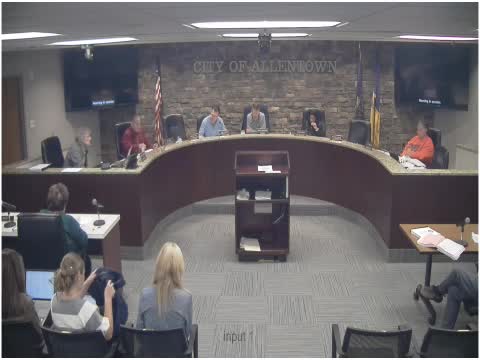
Allentown reviews Community and Economic Development budgets; staff cite efficiencies, grant timing and housing program trade-offs
Summary
Allentown City Council staff on Monday reviewed detailed budgets for the Department of Community and Economic Development, saying most changes reflect contractual salary and benefit adjustments while highlighting program successes and implementation challenges.
Allentown City Council staff on Monday reviewed detailed budgets for the Department of Community and Economic Development, saying most changes reflect contractual salary and benefit adjustments while highlighting several program successes and outstanding implementation challenges.
The department overview covered business support, planning and zoning, building standards and safety, rental registration, federal grants and community housing programs. Dan, a program staff member, said, “Currently, the 2025 program … has an enrollment of 33 businesses,” referring to the SPARK small-business support initiative that provides legal, marketing, website and financial assistance.
The council was told staff have shifted portions of several positions onto grant funding to limit general-fund pressure and that the director’s budget shows only small net changes. Planning and zoning will focus on implementing the recently passed zoning code and completing a fee study; Miss Gomez, the planning director, and staff reported a recent HARB outreach meeting that drew more than 50 attendees.
The building standards and safety presentation credited Heidi Westerman, director of building standards and safety, with several operational changes: implementing the EnerGov permitting system, rewriting permitting processes, and consolidating inspector duties into combo-inspector roles. The department director said inspection turnaround has in some cases fallen “from months to days” and described a move toward a dispatcher/workflow coordinator model that will let inspectors be reassigned in real time.
Heidi Westerman said one top priority is implementing a vacant property registry, which staff expect will both produce revenue and give the city better location data for vacant properties. The department also plans a commercial presale inspection program and board consolidations to reduce redundancies.
On small-business recruitment, staff said the Allentown Works/Recompete federal grant is focused on creating small-footprint manufacturing sites to attract employers; the program aims to convert suitable sites to make them market-ready for manufacturers.
Staff discussed technology investments and challenges. The city implemented EnerGov in 2023 and managers reported improved turnaround, but speakers cautioned about training, reception issues in some buildings and the mixed effect on long-tenured workers. Staff said DocuSign, expanded GIS capabilities and the Neighborly grant-management tool are expected to yield additional efficiencies; however, some systems such as "Suite" remain out of EnerGov because of licensing cost constraints.
Rental registration staff reported that the city sent renewal bills to 10,705 accounts representing the city’s rental universe; 8,806 accounts received emailed bills and, within minutes of issuance, about 340 accounts paid online. The department said fewer than 90 accounts remained unpaid in 2025, a marked improvement from prior years.
The federal grants office is working to close long‑running HUD open accounts and to modernize paper records. The CDBG request for proposals is open and due Dec. 5 at 5 p.m.; staff said they expect scoring with a council member on the panel and award announcements by mid-January. Contract execution, however, is delayed until the federal government resumes operations: staff repeatedly asked for patience while awaiting federal sign-off on contracts.
Community housing staff said the Healthy Homes lead‑abatement and owner‑occupied repair program has remediated roughly 275–280 homes. The department discussed the program’s current deed restriction structure — an in‑perpetuity restriction that requires repayment to the city at sale — and said staff are evaluating shorter, forgivable deeds (for example 20 years) used elsewhere because long restrictions deter some homeowners from accepting assistance.
Council members asked detailed questions about homelessness responses and service delivery. Staff described a limited line item used in the past for hotel placements when families were displaced by code enforcement and explained why the city is reluctant to put city credit cards to hotels directly: one prior placement resulted in $16,000 in damages. Staff said nonprofits can apply for CDBG funding to operate hotel-placement services but must meet federal eligibility and reporting requirements, making it difficult for smaller groups to provide 24/7 hotel placements without larger grant awards.
Health director Dave reviewed bureau programs and staffing, saying the health bureau employs 46 people and manages multiple grants and daily clinics for immunizations, sexually transmitted infections, tuberculosis and substance-use outreach. Staff noted that some COVID-era grant revenue has ended and that the bureau pared staff expansion during the pandemic to avoid unsustainable recurring personnel costs.
The presentation closed with a technology and records note: staff said that digitizing historic paper records (microfiche and boxes of charts) would require additional funds for scanning and indexing, and that further GIS and complaint‑management expansions would improve coordination across housing, health and public safety, subject to legal limits such as HIPAA for health data.
Council and staff expressed mutual thanks for departmental work; no formal motions or votes occurred during the session. The meeting was adjourned.