Get Full Government Meeting Transcripts, Videos, & Alerts Forever!
Get email alerts on the Zoning Wholesale Use topic
No spam. Unsubscribe anytime.
Davenport planning commission recommends allowing wholesale uses in C-3 commercial zones
Summary
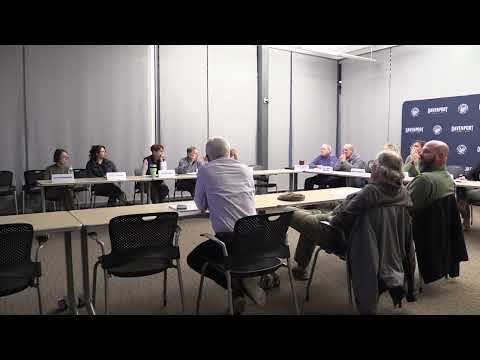
The Davenport Planning and Zoning Commission on Nov. 4 voted to forward Case ORD 25‑03 to city council recommending wholesale sale establishments be allowed as a permitted use in the C‑3 General Commercial zoning district, subject to staff‑recommended findings and conditions.
The Davenport Planning and Zoning Commission on Nov. 4 voted to forward Case ORD 25‑03 to city council with a recommendation to permit wholesale sale establishments as a permitted use in the C‑3 General Commercial zoning district, subject to the five findings and three conditions listed in the staff report.
Staff planner Matt told the commission C‑3 is intended to accommodate larger, higher‑intensity commercial development and clarified wholesale in the proposal means business‑to‑business distribution rather than retail warehouse clubs. Matt said the proposal "conform[s] with our comprehensive plan" and outlined proposed principal‑use standards including a prohibition on outdoor storage of aggregate; a requirement that outdoor storage areas be entirely enclosed by a minimum 6‑foot solid fence or wall (including solid gates); and limits on dust, odors, gas, excessive noise and vibrations.
Commissioners and participants pressed staff on public‑safety and nuisance risks tied to bulk hazardous materials and outdoor storage near residential areas. Multiple speakers said large‑volume storage changes risk profiles compared with retail sales and asked whether the amendment should limit storage of flammable or combustible materials or require minimum separation from residential zoning. Staff and an industry representative noted that the fire marshal, insurers and OSHA play roles in hazardous‑materials oversight and that sprinkler and permitting requirements often apply to warehouse uses, but also acknowledged inspections and enforcement can be inconsistent.
The petitioner, identified as Fagan Hartotte of Mel Foster Commercial representing the applicant, said the market has shifted toward reusing existing large retail buildings for distribution and that most wholesale tenants would handle general goods. Hartotte asked the commission to enable reuse of vacant big‑box or grocery‑scale buildings so they can attract new economic activity rather than remain vacant. He added that insurance underwriting would typically limit hazardous‑materials tenants in older buildings.
During discussion commissioners proposed several approaches: prohibit outdoor bulk hazardous materials in C‑3 where adjacent to residential, require special‑use review for hazardous storage, or keep the current staff conditions and pursue further coordination with the fire marshal and city legal counsel. Staff cautioned that creating new zoning restrictions for hazardous materials could create nonconforming rights for existing uses and recommended continuing the dialogue with counsel and the fire marshal while moving the ordinance forward.
The commission then moved and seconded the staff recommendation and, following a roll call, voted to forward ORD 25‑03 to city council with the five findings and three conditions recommended in the staff report; the motion passed and the case will proceed to city council for final action. Staff said it will continue coordination with the fire marshal on hazardous‑materials and enforcement questions.