
Brooklyn Park raises one‑car driveway limit to 18 feet after staff survey finds widespread noncompliance
Get AI-powered insights, summaries, and transcripts
Sign Up Free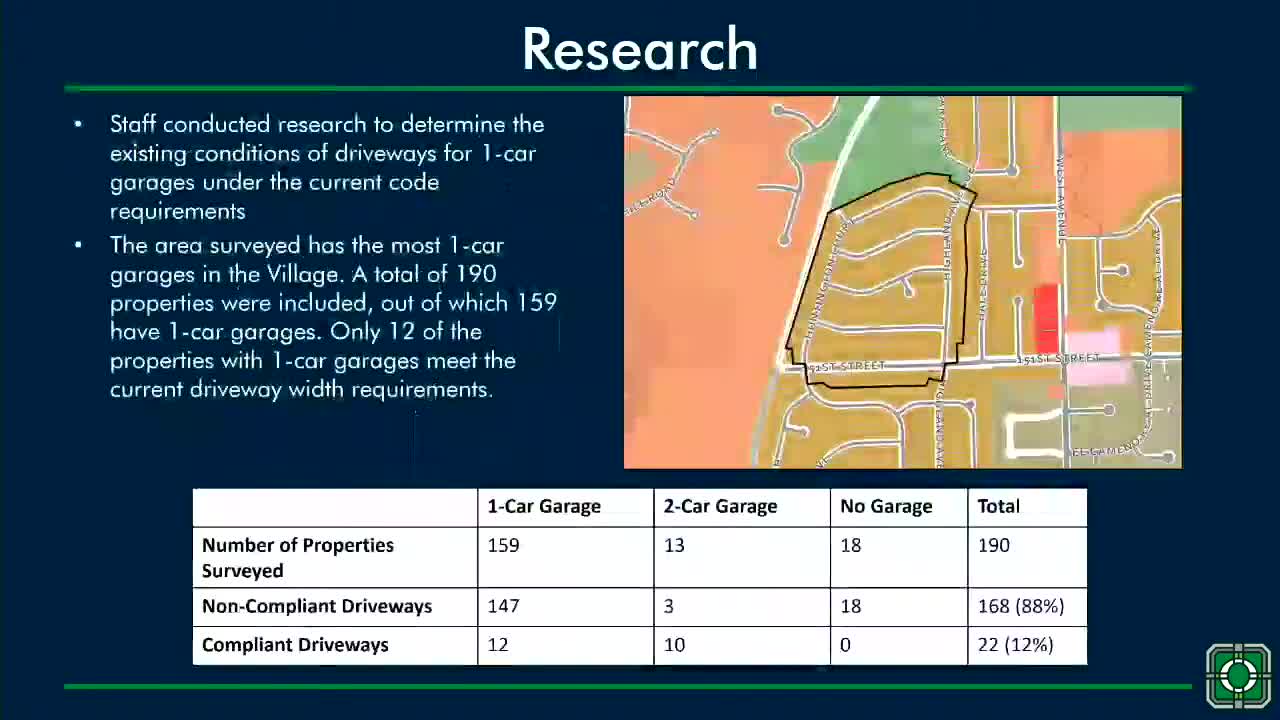
Summary
The Planning Commission approved a land‑development‑code amendment increasing the maximum allowed driveway width for one‑car garages from 10 to 18 feet, citing an aerial survey showing 88% noncompliance in sampled neighborhoods. Commissioners debated enforcement, possible minimum widths and stormwater impacts before approving the change.
The Brooklyn Park Planning Commission on Nov. 4 approved an amendment to the land development code to increase the maximum driveway width for one‑car garages from 10 feet to 18 feet.
Staff presented an aerial survey and proposed code edits intended to clarify driveway rules and reduce the number of noncompliant driveways in the community. Staff said the sample included 190 properties, 159 of which have one‑car garages, and that only 12 of those properties currently meet the 10‑foot maximum. According to the staff presentation, 168 properties in the sample (about 88 percent) were noncompliant under the existing standard; staff said adopting an 18‑foot maximum in the code would reduce noncompliant driveways in the sample from 168 to 72 (approximately 38 percent).
"If the proposed amendment were adopted to increase the maximum driveway width for 1 car garages, the number of non compliant driveways would reduce in the surveyed area from 168 to 72, or 38%," staff told the commission during the presentation. Staff said the single technical change proposed that evening was raising the one‑car maximum; staff also proposed adding driveways to the detached‑accessory‑structure table to improve clarity and reorganizing driveway regulations into a measurement table.
Commissioners generally supported the cleanup but raised enforcement and policy questions. Commissioner Fenton said, "I do have some concerns, especially on the North Side of town," describing cases where homeowners had expanded driveways and parked large trucks, trailers and other vehicles next to houses without permits. Several commissioners asked how the city enforces unpermitted widening.
Staff described enforcement steps: field correction notices, requiring an after‑the‑fact permit application when appropriate, denial of permits for noncompliant work, and referral to municipal court where a judge decides remedies. Staff acknowledged enforcement resource limits and said many cases are addressed after complaints or during permit review.
Some commissioners proposed exploring minimum widths or a range (minimum and maximum) to provide for usable parking aisles; staff said that approach could create nonconforming situations for existing driveways and preferred starting with a targeted maximum increase for one‑car garages but said the planning staff could revisit minimums and other changes later. Commissioners also noted stormwater and lot‑coverage tradeoffs associated with wider driveways.
Commissioner Soussior moved to approve the staff recommended amendment to sections 6‑302(c) and 6‑406(b)(6); Commissioner Paul seconded. The commission voted by roll call and the motion carried.