Get Full Government Meeting Transcripts, Videos, & Alerts Forever!
Get email alerts on the Housing Short Term Rentals topic
No spam. Unsubscribe anytime.
Port Hueneme council continues short‑term rental ordinance after public hearing; spacing rule remains contested
Summary
City Council of the City of Port Hueneme continued a public hearing on a proposed short‑term rental ordinance to Nov. 17 so the full council can consider a draft that would create a permit system, require good‑neighbor standards and impose a citywide cap while staff and residents debate a spacing rule.
City Council of the City of Port Hueneme continued a public hearing on a proposed short‑term rental ordinance to the Nov. 17 meeting so the full council can consider the draft rules.
Staff defined a short‑term rental as a property rented for fewer than 30 consecutive days and said the city currently has about 40–55 active listings on booking platforms but no local permitting or operating standards. The staff presentation summarized outreach completed this year (an online survey with 203 responses and a community forum), and proposed a “balanced” ordinance that would: create a permit system; require 24‑hour local contact and a nuisance response plan; require posted operational rules and parking standards; ensure transient occupancy tax (TOT) compliance; include good‑neighbor standards for trash, noise and parking; and impose a citywide cap equal to 10% of housing units with a spacing/separation rule that would keep short‑term rentals from clustering in the same block or immediate vicinity. Staff warned that because many listings are inside the California Coastal Zone the California Coastal Commission must review any adopted rules, and that stricter limits are less likely to receive Coastal Commission approval.
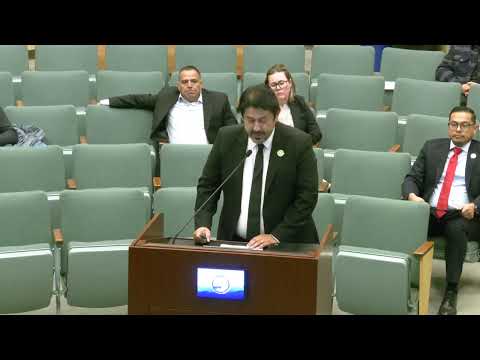
Public commenters included homeowners, short‑term rental operators and homeowners’ association representatives who took differing positions. Operators and several owners told the council the rentals provide family visitors and local economic activity and described screening and parking practices; some operators supported spacing rules to prevent clustering. Homeowners and HOA representatives asked for stricter enforcement, three‑strike revocation language and limits on occupancy and clustering. A local short‑term‑rental manager and a real‑estate industry speaker urged clarity on enforcement details such as exterior signage and on how nights versus days are counted on booking platforms (for example, 29 nights commonly appears on booking sites and corresponds to the 30‑day statutory cutoff staff described).
Council members questioned the proposed $995 initial fee and renewal timing, signage format and how the city would monitor property occupancy and TOT remittance. Staff said a recently passed state bill will require short‑term rental platforms to report booking data to local jurisdictions, which will improve the city’s ability to track rentals and TOT. Council members also focused on the proposed spacing requirement (a 100‑ or 200‑foot separation depending on zone) as the most controversial element: staff said spacing could prevent clusters but might block otherwise compliant single‑family owners by ‘‘bad luck’’ (being adjacent to an existing rental) and that Coastal Commission acceptance of spacing rules is not certain.
Because Councilmembers Hernandez and Perez were absent, and because the separation/spacing rule prompted substantive disagreement, Mayor Pro Tem Lopez moved to continue the ordinance discussion to the Nov. 17 meeting to allow full council participation and additional work by staff. The motion carried: Councilmember Gama — yes; Mayor Pro Tem Lopez — yes; Mayor McQueen LaJeune — yes; Councilmembers Hernandez and Perez — absent.
Next steps: staff will keep working with stakeholders, the HOA coalition and coastal‑zone stakeholders and will return a revised draft and supporting materials to the Nov. 17 council meeting for a full council vote.