
UN, partners launch Gaza catch-up immunization campaign targeting about 44,000 children amid access limits
Get AI-powered insights, summaries, and transcripts
Sign Up Free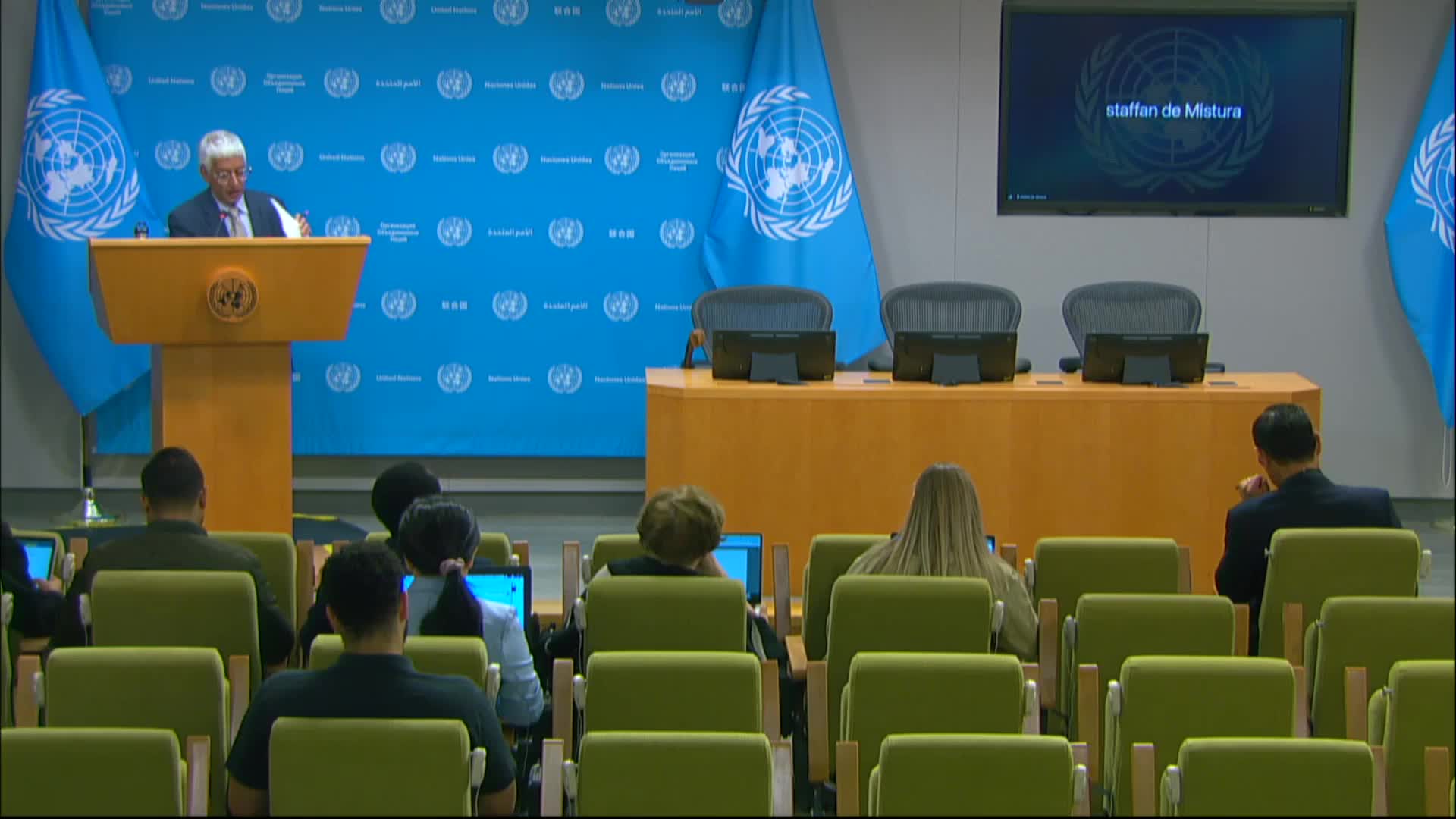
Summary
The United Nations and its partners launched an integrated catch-up immunization, nutrition and growth-monitoring campaign in the Gaza Strip that aims to reach roughly 44,000 children cut off from services by the war.
The United Nations and its partners announced the launch of an integrated catch-up immunization, nutrition and growth-monitoring campaign in the Gaza Strip that aims to reach roughly 44,000 children who have been cut off from lifesaving services by the war. The UN Spokesperson said the first of three planned rounds will start Sunday and run for 10 days, with vaccinations to take place at nearly 150 health facilities and 10 mobile clinics across the territory.
UN agencies participating in the campaign include the UN Children's Fund (UNICEF), the UN Relief and Works Agency (UNRWA) and the World Health Organization, which will carry out the campaign in collaboration with the Gaza Ministry of Health. Vaccines listed for the campaign include pentavalent, polio, rota, pneumococcal conjugate and two doses of measles-mumps-rubella.
The spokesperson said all vaccines, syringes, cold-chain equipment and nutrition supplies have already been brought into the Gaza Strip and that more than 450 health workers and support staff, as well as nearly 150 doctors, have been trained to carry out the rounds. "The campaign's success depends on the full respect of the ceasefire so that families, health professionals, and other humanitarian workers can reach vaccination sites freely and safely," the spokesperson said (00:01:38).
The UN also described a broader scale-up of life-saving assistance. On Monday, 183 community kitchens served about 1.2 million meals, an increase of more than 80% compared with last September. Humanitarians reported nearly 1,900 water points operated by more than 40 partner organizations and the distribution of thousands of hygiene kits, buckets and jerry cans. The UN and partners distributed tarpaulins, tents and provided cash vouchers for clothing ahead of winter for hundreds of families.
Logistics remain constrained. The spokesperson reported that just two crossings were operational for cargo and that aid teams had to use narrow, congested roads with commercial traffic often prioritized. On Monday more than 180 truckloads of critical supplies were offloaded at crossings, including over 1,500 metric tons of food; teams were able to collect about 20 truckloads inside Gaza, including more than 580 pallets of blankets, tents and winter clothing, roughly 150,000 liters of fuel and more than 90 metric tons of animal fodder. The spokesperson said operations were also restricted by NGO registration requirements that effectively bar most nongovernmental organizations from taking part in the scale-up.
The briefing closed with an appeal to relevant authorities and those with influence to remove obstacles so humanitarian deliveries can reach all those in need. "We are actively engaging with relevant authorities and all those with influence to secure the lifting of obstacles and restrictions so that we can truly leave no one behind," the spokesperson said (00:03:12).
The UN's description of the campaign and the scale-up of food, water and shelter assistance sets out immediate operational actions and highlights the dependence of health and nutrition outcomes on access and security in the territory. No formal UN decision or vote was recorded during the briefing on this item.